
✓
Written By 克里斯托弗·康博士, Senior Consultant Ophthalmologist
Last Updated: July 12, 2026
Cataracts develop in four stages: early, immature, mature and hypermature. As the eye’s natural lens becomes progressively cloudier, vision moves from mildly blurred to severely impaired. Knowing which stage a cataract has reached helps you understand your symptoms and when treatment may be needed.
A cataract can affect anyone, but it becomes far more common with age, and factors such as diabetes, smoking, long-term steroid use and prolonged sun exposure can speed its development.
A cataract can affect anyone, but certain factors make some individuals more susceptible. In most cases, this condition is prevalent among those over 60. Factors such as diabetes, smoking, and prolonged sun exposure can increase the risk of cataract formation and development.
The impact of cataracts goes beyond blurred vision; it can affect your everyday activities and quality of life. When left unmanaged, cataracts can develop into different stages that affect how you see and function. As such, it’s essential to be aware of the different signs of each cataract stage so you can get the care and treatment needed to manage the condition.
What Are the 4 Stages of Cataract Development?
Eye specialists commonly describe cataract progression in four stages, based on how cloudy the lens has become and how much vision is affected. You may also hear these described as levels or grades, for example a level 2 or grade 2 cataract, which correspond to the same progression.
Stage 1: Early Cataract
In the early stage, sometimes called an incipient cataract, the lens is still largely clear, but it is beginning to lose flexibility and small areas of clouding may start to form. Many people notice nothing at all, and early cataracts are often picked up during a routine eye examination.
Common signs at stage 1:
- Slightly blurred or hazy vision
- Increasing difficulty shifting focus between near and far
- Mild glare or light sensitivity, especially at night
- More frequent eye strain or tiredness
What to do: no treatment is usually needed at this stage. Updating your spectacle prescription, using brighter light for reading and wearing UV-protective sunglasses can manage the symptoms. From this point on, regular eye checks are recommended so any progression is picked up early.
Stage 2: Immature Cataract
At the immature stage, often described as a level 2 or grade 2 cataract, proteins within the lens have begun to clump together and the clouding becomes visible on examination. This is typically the point at which symptoms start to interfere with daily life.
Common signs at stage 2:
- Noticeably blurred or dimmer vision
- Difficulty driving at night due to glare and halos around lights
- Colours appearing faded or yellowed
- Trouble with reading and other close work
- Frequent changes to your spectacle prescription
What to do: many people manage well at this stage with updated prescriptions and anti-glare lenses, but this is a sensible time to see an eye specialist. Monitoring how quickly the cataract is progressing helps with planning treatment before vision deteriorates further.
Stage 3: Mature Cataract
A mature cataract means the lens has become significantly or completely opaque. The clouding may now be visible to others as a whitish or amber discolouration of the lens, and vision is severely affected.
Common signs at stage 3:
- Severely blurred or misty vision that glasses can no longer correct
- Marked difficulty with night driving, reading and recognising faces
- Strong glare sensitivity and pronounced halos
- A visible white, grey or brownish tint in the pupil
What to do: at this stage, visual aids rarely provide meaningful improvement, and cataract surgery is usually recommended. Most people who reach the mature stage find daily activities noticeably restricted, and this is the most common trigger for surgical treatment.
Stage 4: Hypermature Cataract
A hypermature cataract is the most advanced stage. The lens has hardened and shrunk, and the proteins inside it begin to break down. Vision loss is severe, and the cataract itself becomes technically more difficult to remove.
What can happen at stage 4:
- Severe visual impairment, in some cases limited to perceiving light and movement
- Inflammation within the eye caused by leaking lens proteins
- Raised pressure inside the eye, which can damage the optic nerve and lead to glaucoma
If a hypermature cataract triggers raised eye pressure, prompt assessment is needed and 青光眼治疗 may be required alongside cataract removal. Reaching this stage is avoidable, as cataracts are routinely treated well before they become hypermature.
Cataract Stages at a Glance
| Stage | What the lens looks like | Typical symptoms | Usual next step |
|---|---|---|---|
| 1. Early | Mostly clear, minor clouding | Mild blurring, glare, focusing difficulty | Monitoring and an updated prescription |
| 2. Immature | Partially cloudy, greyish | Blurred vision, night glare, faded colours | Specialist review and planned monitoring |
| 3. Mature | Fully opaque, white or amber | Severe blurring that glasses cannot correct | Cataract surgery is usually recommended |
| 4. Hypermature | Hardened, shrunken, milky white | Profound vision loss, risk of inflammation and raised eye pressure | Prompt surgical assessment |
How Are Cataract Stages Diagnosed and Graded?
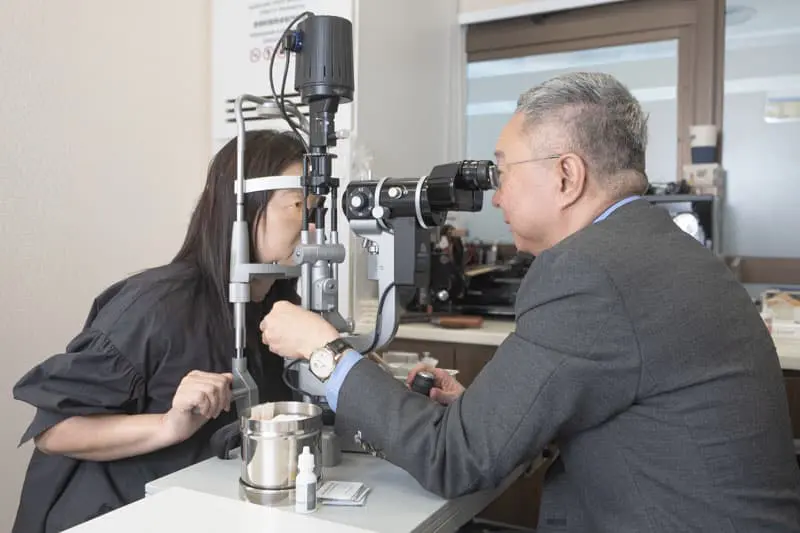
The stage of a cataract cannot be reliably judged from symptoms alone. During a cataract screening, your pupils are dilated and the lens is examined under a slit lamp, a microscope that lets the specialist see exactly where the clouding sits and how dense it has become. Your visual clarity and eye pressure are checked at the same visit.
Specialists often record cataracts using clinical grading scales, which score the density and location of the clouding. This is why you may see a term such as grade 2 nuclear cataract in an eye report. The grade reflects severity and broadly corresponds to the stages described above, and it allows change to be measured accurately between visits so that treatment can be timed appropriately.
Which Cataract Stage Needs Surgery?
There is no rule that a cataract must reach a particular stage, or become ripe, before it can be removed. Modern techniques can treat a cataract at any stage, and waiting too long can make the procedure more complex, particularly once a cataract becomes hypermature.
In practice, 白内障手术 is usually considered when:
- Vision interferes with daily activities such as reading, driving or recognising faces
- Glasses or contact lenses no longer provide adequate correction
- The cataract is affecting the management of another eye condition
- The cataract has reached the mature stage, where progression will only continue
Most people have surgery somewhere between the late immature and mature stages. If you are unsure which stage your cataract has reached, an assessment with an eye specialist can give you a clear picture and help you plan the timing that suits you.
Why Consider Cataract Surgery?
Undergoing surgery when advised by your cataract eye specialist can help prevent your condition from becoming so severe that it may affect your ability to see and function in your daily life. Moreover, timely surgical intervention ensures better outcomes, faster recovery, and a higher likelihood of preserving overall eye health. With the restoration of clear vision, you can resume activities that you may have gradually withdrawn due to visual impairment.
These days, as healthcare progresses, cataract surgeries have evolved to become a more minimally invasive procedure. Therefore, you can expect minimal discomfort during and after surgery.

When to Consider Cataract Surgery
Cataract surgery becomes a viable option when the condition significantly interferes with daily life. If activities like reading, driving, or recognising faces become challenging, consulting with a cataract eye specialist is crucial. They can help you determine when the right time for surgery will be. Though you may not require treatment in the early stages of your cataract development, waiting too long to undergo surgery could risk impairing your vision in the long run.
Finding the Right Cataract Specialist
Choosing the right cataract specialist is paramount for optimal treatment outcomes and long-term recovery. Therefore, make sure to look for an experienced eye care clinic with qualified specialists. It’s important to consider the cataract specialist’s experience and expertise in the field, as well as the equipment they have available to ensure the safety and comfort of your procedure.
You can check out reviews online to see what patients have to say about the clinic. Another way is to get referrals from your physician, especially for patients with chronic conditions such as diabetes, who should also prioritise diabetic eye care. That way, your physician can work closely with your eye care specialist on a treatment plan that can manage your overall health.

Dr. Christopher Khng, specializes in Complex Cataract and Anterior Segment Reconstruction Surgery, in particular, Iris Reconstruction and surgery for Aniridia. His other areas of expertise include Complex Lens surgery, New Lens and Phacoemulsification technologies, Refractive surgery, Phakic IOLs (the Implantable Collamer Lens, ICL), and small-incision, topical anesthesia phacoemulsification cataract surgery. Dr. Khng is a member of the Singapore Medical Association (SMA), a Fellow of the American Academy of Ophthalmology, the American Society of Cataract and Refractive Surgery (ASCRS), and the European Society of Cataract and Refractive Surgery (ECSRS). He is registered with the Singapore Medical Council (SMC) in Singapore and with the General Medical Council (GMC) for practice in the United Kingdom.
Frequently Asked Questions About Cataract Stages
How quickly do cataracts develop?
Most age-related cataracts develop gradually over several years, and many people live with early-stage cataracts for a long time before needing treatment. Progression varies from person to person, and some types, such as posterior subcapsular cataracts, can advance over months. Regular eye examinations are the most reliable way to track how quickly a cataract is changing.
At what age do cataracts usually develop?
Age-related changes to the lens often begin from the 40s and 50s, and most cataracts are diagnosed in people over 60. Cataracts can develop earlier in people with diabetes, long-term steroid use, high myopia or previous eye injury, and in rare cases they are present from birth.
Does everyone get cataracts?
Most people will develop some degree of lens clouding if they live long enough, which is why cataracts are so common in older age. However, not everyone progresses to a stage where vision is significantly affected or treatment is needed.
What stage of cataract requires surgery?
Surgery is usually considered once a cataract interferes with daily life, which for many people happens between the immature and mature stages. There is no need to wait for a cataract to ripen, and treating it before it becomes hypermature generally makes surgery more straightforward.
What is the difference between mature and hypermature cataracts?
A mature cataract means the lens has become completely opaque and vision is severely affected. A hypermature cataract is a further stage in which the lens hardens and its proteins begin to break down, which can cause inflammation and raised eye pressure and makes surgical removal more complex.
Can cataracts develop quickly?
Yes, in some situations. Posterior subcapsular cataracts, cataracts linked to diabetes or steroid use, and cataracts that follow an eye injury can progress noticeably within months. If your vision seems to be changing quickly, it is worth arranging an eye examination sooner rather than later.