
Eye Trauma, Ocular Injury & Blunt Force Trauma Treatment

Dr. Christopher Khng
- Medical Director, Senior Consultant Ophthalmologist
- MBBS, M.Med(Ophth), FRCS(Edin), AMS(Ophth 2003)
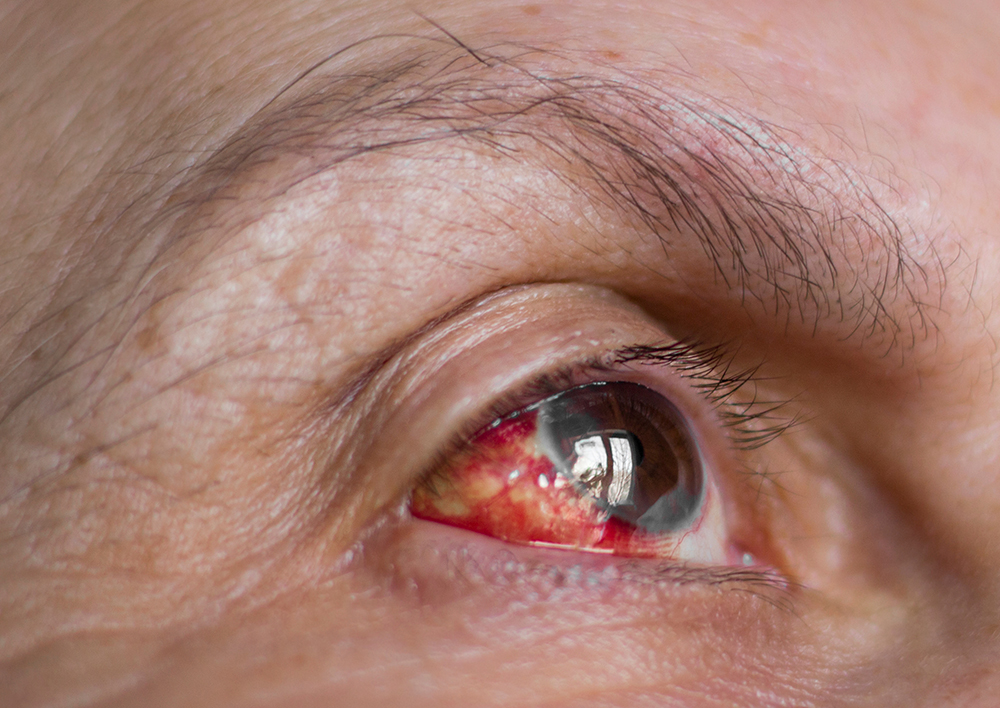
Table of Contents
- Dr Christopher Khng: Cataract Specialist
- Common Types of Eye Injuries
- Symptoms & Urgency Guide
- First Aid – What to Do
- Diagnosis & Treatment at EyeWise Vision Clinic
- Complications & Prevention
- Costs, Insurance & Medisave
- Worried about a recent eye injury or sudden change in vision?
- Frequently Asked Questions
- Contact Us
Trauma to the front of the eye can range from a mild scratch to a sight-threatening globe rupture. Common causes include sharp objects, chemicals, blunt force and sports accidents.
Prompt recognition and treatment are essential to prevent vision loss and improve outcomes. This guide explains the types of eye injuries, signs that warrant emergency care, first-aid measures, available treatment options and when to seek medical assessment.
The specialist leading your care
Our Eye Surgeon

Dr Christopher Khng
Medical Director, Senior Consultant Ophthalmologist
MBBS, M.Med(Ophth), FRCS(Edin), AMS(Ophth 2003)
Dr Christopher Khng is a Senior Consultant Ophthalmologist and Medical Director of EyeWise Vision Clinic. He has over two decades of experience managing conditions affecting the anterior segment of the eye, including traumatic injuries to the cornea, iris and lens.
His practice includes the assessment and surgical management of anterior segment conditions, including cases involving structural damage to the eye.
Dr Khng graduated from the National University of Singapore (NUS) following his initial medical training at Aberdeen University, Scotland, where he received academic distinctions in medicine.
Dr Christopher Khng
Medical Director, Senior Consultant Ophthalmologist
MBBS, M.Med(Ophth), FRCS(Edin), AMS(Ophth 2003)
Common Types of Eye Injuries
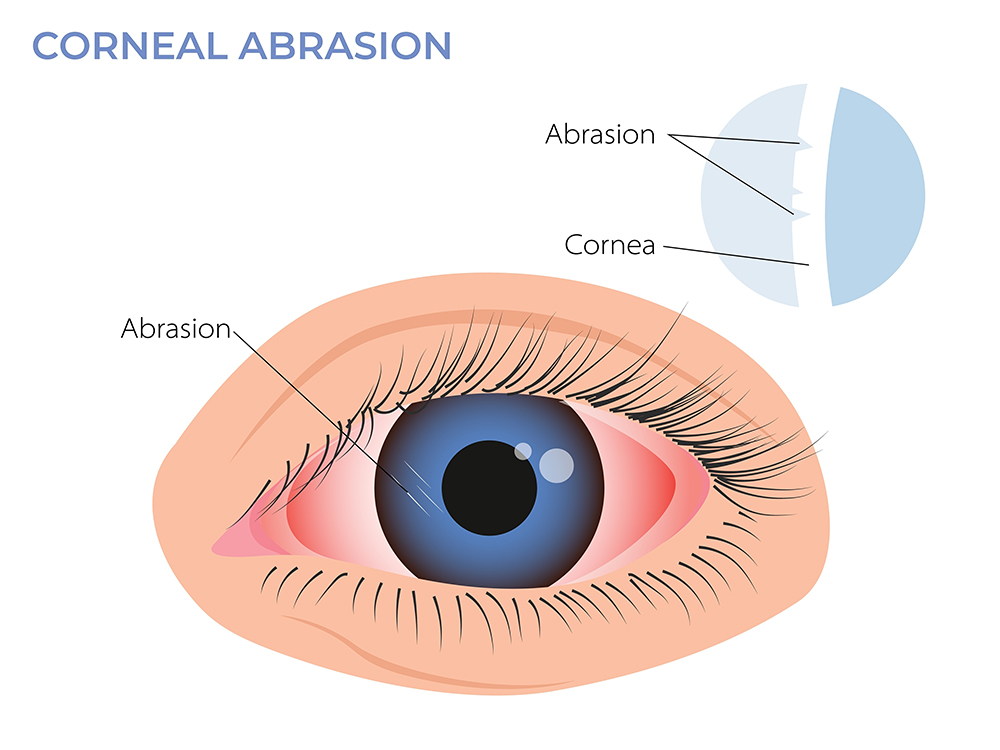
Minor surface injuries
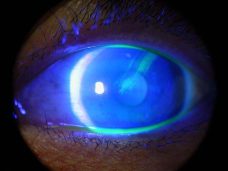
Small scratches or abrasions of the cornea are among the most common injuries. They cause intense pain, tearing and sensitivity to light. Under blue light, these abrasions stain bright yellow‑green.
In most cases, they heal within 24 to 48 hours, but you should still see a doctor to rule out embedded foreign bodies or infection. After examination and treatment, your eye may be padded for a day to aid healing.
Chemical injuries: Acids vs alkalis
Household substances such as bleach, thinners, battery acid or even shampoo can cause chemical burns. Acid burns tend to coagulate corneal proteins and are generally less destructive than alkali burns.
Alkali burns are lipophilic; They penetrate cell membranes rapidly, denature collagen and can reach the anterior chamber within seconds, causing deeper and more severe damage.
First aid involves flushing the eye with cool running water or saline for at least 15 minutes. Do not attempt to neutralise the chemical or use eye drops until irrigation is underway; Seek emergency care immediately.
Blunt trauma, hyphaema & blowout fractures
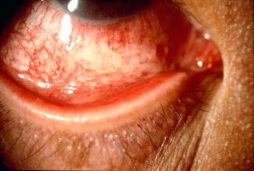
Blunt impacts from balls, fists or falls can cause bleeding under the conjunctiva (“red eye”). Without deeper injury, this usually clears in one to two weeks. More severe impacts can damage the iris, lens or retina, leading to traumatic cataract, lens dislocation or iris tears.
Hyphaema, where blood pools between the cornea and iris, is an emergency due to the risk of glaucoma. Fractures of the bones around the eye, also called orbital blowout fractures, cause double vision, painful eye movements and facial numbness.
Avoid blowing your nose and seek urgent evaluation; CT imaging may be required.
Penetrating injuries & open vs closed globe
Sharp objects such as wires, pencils or knives can puncture the eyeball, creating an open globe injury. Blunt trauma can also rupture the globe if the force increases intra‑ocular pressure.
Eye‑injury classifications divide injuries into closed globe (contusions or lamellar lacerations) and open globe (lacerations or full‑thickness globe rupture). A lamellar laceration is a partial‑thickness wound of the eye wall, while a globe rupture is a full‑thickness break.
Do not remove any embedded object or apply pressure. Shield the eye and seek emergency treatment immediately; surgery is required to repair the wound and prevent infection.
Hyphaema & blood in the eye
Hyphaema follows blunt trauma and results in visible blood layering in the front chamber. It can increase intra‑ocular pressure and threaten vision if left untreated. Keep the patient upright, avoid bending or straining and seek immediate care.
Symptoms & Urgency Guide
Refer to the table below to decide whether to visit a GP or seek emergency care for assessment by an eye specialist:
| Symptom / Sign | Possible Condition(s) | Recommended Action |
|---|---|---|
| Mild irritation, gritty feeling after dust exposure | Minor irritation, superficial foreign body | Blink repeatedly; rinse the eye with clean water. See a GP if discomfort persists. |
| Severe pain, tearing, photophobia, inability to open the eye | Corneal abrasion | Same‑day appointment with an eye specialist; avoid rubbing the eye. |
| Chemical splash, burning or stinging | Acid or alkali burn | Flush with water for ≥15 minutes; remove contact lenses during irrigation; seek emergency care immediately. |
| Blood layering in front of the iris, sudden vision changes | Hyphaema | Emergency: keep upright, avoid bending; go to an ophthalmologist or hospital A&E. |
| Double vision, pain with eye movement, numbness after trauma | Orbital blowout fracture | Emergency evaluation; avoid blowing nose; CT scan may be necessary. |
| Object protruding from the eye or severe pain with vision loss | Open globe injury | Do not remove the object; shield the eye without pressure and go to emergency services immediately. |
| Flashes, floaters, curtain over vision | Retinal tear or detachment | See a retina specialist urgently; surgery may be needed within 24 hours. |
First Aid – What to Do
Rinse the eye with clean water or saline using an eyecup or drinking glass.
Blink to encourage tearing and dislodge debris.
Pull the upper lid over the lower lid to brush away small particles.
Do not rub the eye or use cotton swabs or tweezers.
Do not attempt to remove an embedded foreign body.
If contact lenses are in place during a chemical injury, begin flushing first; lenses may come out during irrigation.
Diagnosis & Treatment at EyeWise Vision Clinic
Comprehensive assessment
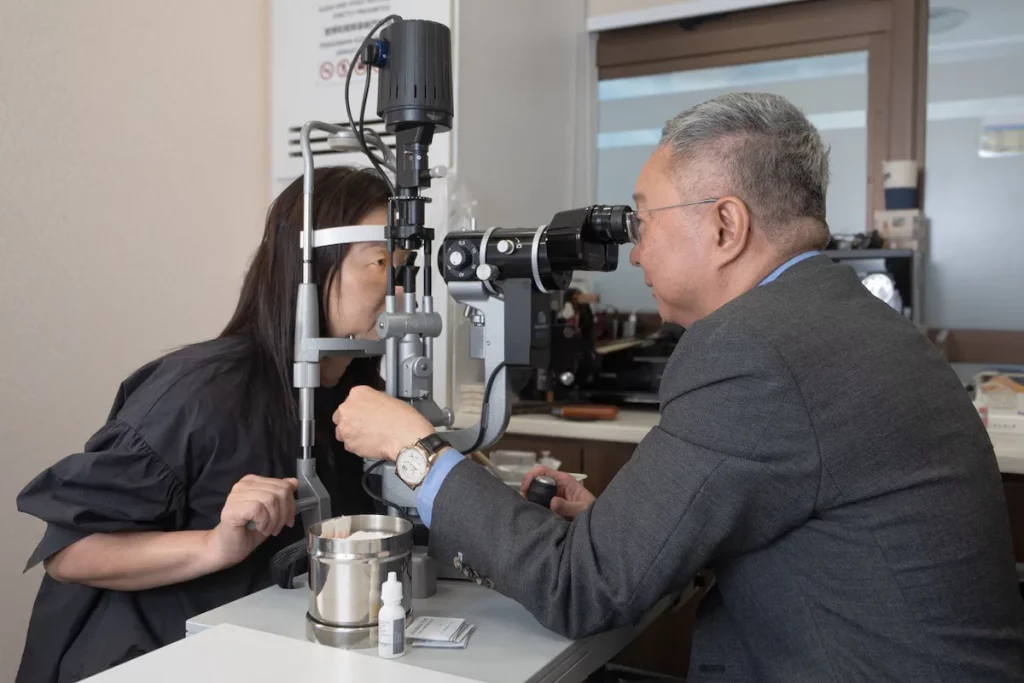
Our team starts with a detailed history, visual acuity check and slit‑lamp examination:
We may measure intra‑ocular pressure and use imaging anterior‑segment OCT, B‑scan ultrasound and CT scans to detect hidden injuries or intra‑ocular foreign bodies.
Surgical expertise
EyeWise Vision Clinic specialises in treating complex injuries:
- Repair of lamellar lacerations and open‑globe ruptures: microsurgical suturing to restore eye integrity and prevent infection.
- Anterior segment reconstruction & iris repair: repositioning or replacing damaged lenses, reconstructing torn iris tissue and using phakic intra‑ocular lenses for vision correction.
- Removal of intra‑ocular foreign bodies: using magnets or forceps under microscope guidance.
- Management of hyphaema: medication to control pressure, bed rest, and surgical evacuation if bleeding is severe.
- Orbital blowout fracture repair: collaboration with maxillofacial surgeons when necessary.
Post‑injury care & rehabilitation
We monitor for complications such as infection, cataract formation, glaucoma and scarring.
Rehabilitation may include topical medication, protective eyewear, ocular physiotherapy for double vision and, if necessary, additional surgeries like cataract extraction or corneal transplantation.
Complications & Prevention
Untreated corneal abrasions can lead to corneal ulcers. Severe chemical burns may cause limbal stem cell loss, scarring or secondary glaucoma. Blunt trauma can lead to cataracts, retinal detachment or glaucoma. Prevention is key:

Workplace safety: Wear certified safety goggles or face shields when drilling, grinding or handling chemicals.

Sports protection: Use sport‑specific protective eyewear made from polycarbonate; 90 % of sports‑related eye injuries can be prevented with appropriate protection. Ordinary eyeglasses are not sufficient.

Children’s safety: Insist that children wear protective eyewear during sports; One-third of sports‑related eye injuries occur in children.

Keep hazardous chemicals properly labelled and stored.
Costs, Insurance & Medisave
Emergency eye surgery is generally Medisave‑claimable under the Ministry of Health’s Table of Surgical Procedures. Table 4C covers many eye trauma surgeries and allows a withdrawal limit of ~S$2,540, plus daily hospital charges if admitted. This means part of your surgical fees, surgeon, operating theatre and facility charges can be paid from your Medisave account.
Patients with Integrated Shield Plans or personal accident insurance can often claim additional benefits; request a Letter of Guarantee so the clinic can bill your insurer directly.
Worried about a recent eye injury or sudden change in vision?

At EyeWise Vision Clinic, we provide prompt assessment for eye trauma, including corneal abrasions, blunt injuries and chemical exposure.
Early evaluation is important to reduce the risk of complications and protect vision. Our team will advise on whether monitoring, medication or surgical treatment is required.
If you are experiencing pain, blurred vision, light sensitivity or visible injury, seek medical attention promptly.
Contact us to arrange an assessment.
Frequently asked questions
Patient information
How long does an eye injury take to heal?
Minor corneal abrasions heal in 24–48 hours. More severe injuries may require weeks to months and sometimes surgery.
Is eye trauma considered an emergency?
Yes. Pain, vision loss, blood in the eye, flashes, floaters or chemical exposure warrant immediate medical attention.
What should I do if a chemical splashes into my eye?
Flush the eye with water or saline for at least 15 minutes. Alkali burns are more dangerous than acid burns and penetrate deeper. Seek emergency care.
Is treatment for eye trauma Medisave‑claimable?
Yes. Surgical repair of eye injuries generally falls under MOH’s Table 4C, with a withdrawal limit around S$2,540. Integrated Shield Plans may cover the remainder.
Can minor eye injuries heal on their own?
Some abrasions heal without intervention, but you should still see a doctor to rule out hidden foreign bodies and infection.
What is hyphaema and why is it dangerous?
Hyphaema is blood pooling between the cornea and iris. It can raise intra‑ocular pressure and threaten vision; prompt treatment is essential.
How do I know if I have an orbital blowout fracture?
Double vision, pain on looking up, numbness around the cheek, or a sunken‑in eye indicate a possible blowout fracture. Seek emergency assessment and avoid blowing your nose.
What is the difference between a corneal abrasion and a penetrating injury?
A corneal abrasion is a superficial scratch; a penetrating injury involves a full‑thickness wound of the eyeball, requiring urgent surgery.
Can I remove a foreign body from my eye myself?
No. Rubbing or using instruments may worsen the injury. Blink, rinse the eye and seek medical care.
When should I see an eye specialist versus a GP?
Consult a GP for mild irritation or if a speck of dust causes discomfort. See an ophthalmologist immediately for pain, blurred vision, bleeding, or chemical exposure.
Does eye trauma always require surgery?
Not always. Minor injuries may heal with medication and rest. Surgery is needed for open‑globe injuries, lamellar lacerations involving the full thickness of the eye wall, lens dislocation, iris tears and orbital fractures.
Can sports injuries cause long‑term eye damage?
Yes. High‑speed balls or contact can cause retinal detachment, lens dislocation and hyphaema. Protective sports goggles are vital.
How can I prevent workplace eye injuries?
Wear certified safety goggles or face shields when handling chemicals, drilling or grinding; ensure eye‑wash stations are available. Over 90 % of serious eye injuries are preventable with proper protection.
Are children at risk for eye trauma?
Yes. Approximately one‑third of sports‑related eye injuries occur in children. Supervision and protective eyewear during sports and play are key.