
Why Is My Vision Blurry Again? Understanding Posterior Capsule Opacification (PCO) or "Secondary Cataracts"
If your vision has become hazy months or years after cataract surgery, you do not have a new cataract. Here is what is happening and how it can be treated.

Dr. Christopher Khng
- Medical Director, Cataract Surgery Specialist
- MBBS, M.Med(Ophth), FRCS(Edin), AMS(Ophth 2003)

What Is Posterior Capsule Opacification?
During cataract surgery, the cloudy natural lens is removed and replaced with a clear artificial intraocular lens (IOL). A very thin membrane called the posterior capsule is deliberately left in place it cradles and supports the IOL in exactly the right position within the eye.
Over time, residual lens epithelial cells remaining on the edge of the capsule can migrate across this membrane. As they multiply and spread, they form a translucent, sometimes wrinkled film that sits directly in the optical pathway. Light can still enter the eye, but it scatters rather than focusing cleanly on the retina.
The visual effect is similar to looking through a misted window: not darkness, but a persistent softness and loss of sharpness. Colours lose their vibrancy. Glare increases. Contrast sensitivity drops.
Posterior Capsular Opacification or Secondary Cataracts is not caused by anything you did wrong. It is not a sign of surgical failure:
It is a biological response that cannot always be prevented affecting an estimated 20% of patients within two to five years of cataract surgery, even after technically excellent operations. Importantly, PCO is painless, it develops silently and it is completely reversible.
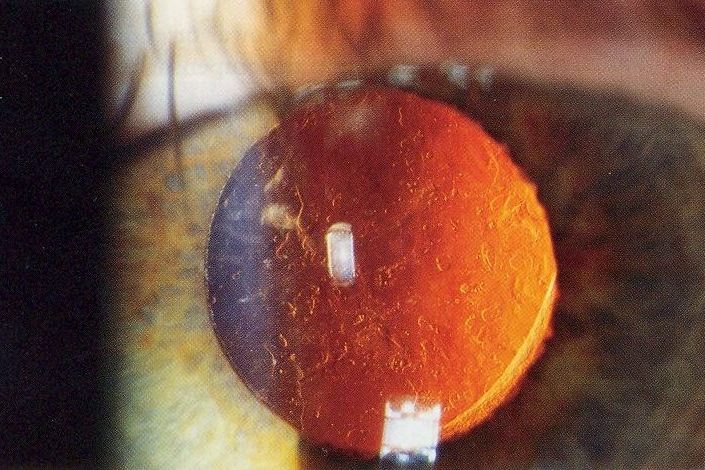
Image source: https://en.wikipedia.org/wiki/Capsulotomy
Recognising the Symptoms of Secondary Cataracts
Hazy or Cloudy Vision
A general softness or loss of sharpness that is not corrected with a new glasses prescription.
Increased Glare Sensitivity
Particularly noticeable in bright sunlight, fluorescent lighting or facing oncoming headlights.
Halos Around Lights at Night
Reduced Contrast Sensitivity
Difficulty distinguishing objects against similar backgrounds. Colours may appear washed out or flat.
Difficulty Reading Fine Print
Fluctuating Vision
Find Out Whether PCO Is Affecting Your Vision
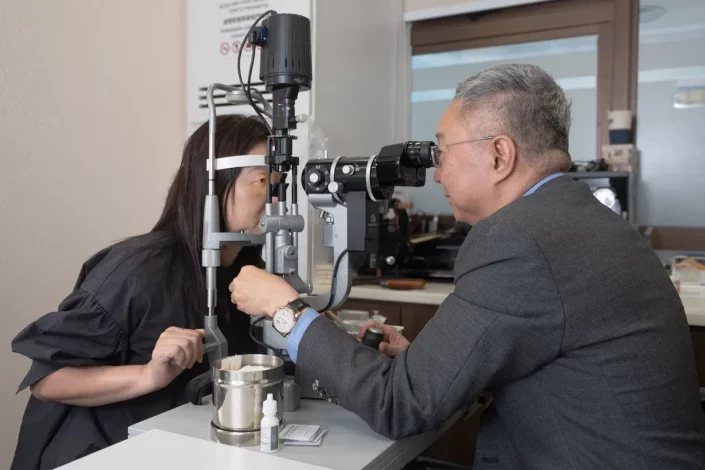
If you have had cataract surgery and are noticing two or more of these signs, a slit-lamp assessment at EyeWise Vision Clinic can confirm the cause within the same appointment and provide a clear path forward.
When Should You Have Your Eyes Checked After Cataract Surgery?
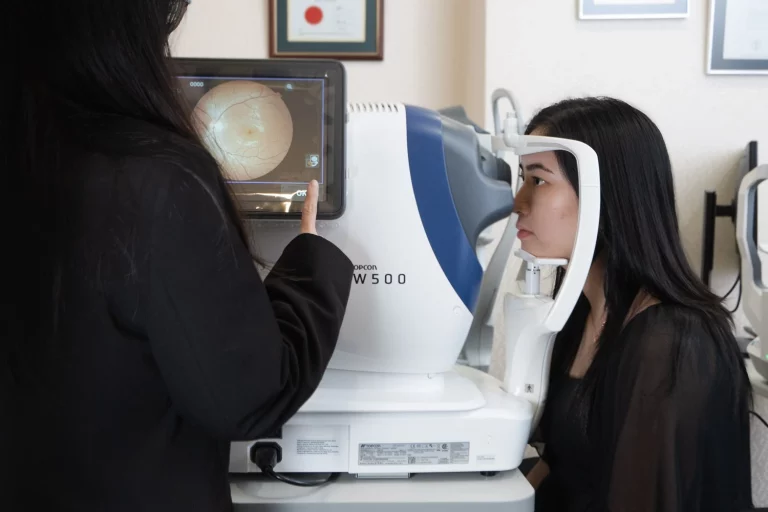
You should consider an eye examination if you notice any of the following:
- Your vision is no longer as clear as it was after surgery
- Glare or light sensitivity is becoming more noticeable
- It has been more than a year since your last eye examination
- Clear vision is especially important for driving, work or daily activities
Regular eye examinations can help detect PCO early and keep your vision clear and comfortable.
How Is PCO Diagnosed?
Diagnosing PCO is a non-invasive, in-clinic process. No blood tests, scans, or surgical preparation are required. Please allow approximately 60–90 minutes for your first visit.
1
Visual Acuity Assessment
2
Mydriatic Drops Applied
3
Slit-Lamp Examination
4
Retroillumination
5
Diagnosis and Discussion
Other Eye Conditions That May Cause Similar Symptoms
Blurred vision after cataract surgery is not always caused by PCO. The comparison below outlines other conditions that can present in similar ways
| Condition | Key Features | How it differs from PCO |
|---|---|---|
| Posterior Capsule Opacification (PCO) | Gradual haze, glare, reduced contrast. Appears months to years post-op. | Caused by cell growth on capsule. Confirmed by retroillumination on slit-lamp. Permanent fix with laser. |
| Dry Eye Disease | Burning, grittiness, watery eyes, vision fluctuating with blinking. | Tear film instability not a lens issue. Treated with lubricating drops and lid hygiene. |
| Cystoid Macular Oedema (CMO) | Reduced central visual acuity, distortion. Usually within weeks post-op. | Fluid at the macula. Confirmed by OCT imaging. Treated with anti-inflammatory drops. |
| Refractive Shift | Glasses no longer feel right. Prescription may have changed post-op. | Not a structural issue. Updated glasses prescription resolves it. |
| Posterior Capsule Wrinkle | Slight visual distortion, ghost images. | A mechanical fold rather than cell growth. Also treated with laser if symptomatic. |
Take the First Step Towards Clarity
Frequently asked questions
Patient information
About the Condition
I had cataract surgery three years ago. Could I still develop PCO now?
Yes. PCO can develop at any point after cataract surgery, most commonly within two to five years, but occasionally earlier or later. There is no defined period after which you are in the clear. If your vision has changed since your surgery and is not correctable with a new glasses prescription, it is worth having a slit-lamp assessment at EyeWise Vision to confirm the cause.
Is PCO more common in older patients?
Interestingly, PCO can be more prevalent in younger patients, whose residual lens cells tend to be more biologically active and migrate more readily across the posterior capsule. Age is only one factor. The design of the IOL implanted particularly whether it has a sharp posterior-edge profile that reduces cell migration also plays a significant role, as does each individual’s healing response.
My glasses prescription has changed since my cataract surgery. Could that be PCO?
Can PCO be prevented?
Can posterior capsule opacification go away by itself?
Does everyone get PCO after cataract surgery?
Does PCO get progressively worse?
Is posterior capsule opacification painful?
Diagnosis & Treatment
How do you know if I have PCO after cataract surgery?
How long does a PCO assessment take at EyeWise Vision?
What does PCO look like?
Is PCO treatment permanent?
Can you have PCO without having had cataract surgery?
The specialist leading your care
Our Cataract Surgeon

Dr Christopher Khng
Medical Director, Senior Consultant Ophthalmologist & Cataract SpecialistMBBS, M.Med(Ophth), FRCS(Edin), AMS(Ophth 2003)
Dr Christopher Khng is a Fellowship-Trained eye specialist based in Singapore, specialising in Cataract Surgery, utilising Bladeless techniques and advanced Lens Implants.
With over two decades of experience in complex cataract surgery and anterior segment reconstruction, Dr Khng manages advanced cataract cases requiring specialised surgical techniques.
His expertise covers iris repair and complex intraocular lens surgery procedures, often required when standard cataract surgery is insufficient.
Dr Khng graduated from the National University of Singapore (NUS), following his initial medical training at Aberdeen University in Scotland, where he received academic distinctions in medicine.
Built on extensive international training and clinical tenure, he is proficient in treating complicated cataract cases with minimal visual compromise, utilising established techniques and implant devices such as capsular tension rings, iris hooks and specialised sutures.
Dr Christopher Khng
Medical Director, Senior Consultant Ophthalmologist & Cataract SpecialistMBBS, M.Med(Ophth), FRCS(Edin), AMS(Ophth 2003)

Contact Us
Have concerns about your eye health or changes in your vision? Our team is here to help. Simply complete the form below, or reach us directly by phone (+65 6476 1211) or WhatsApp for assistance with your appointment.