
Glaucoma is a serious, chronic eye condition and a leading cause of irreversible blindness worldwide. The most common form, primary open-angle glaucoma, often progresses silently, with no symptoms until significant vision loss has already occurred.
While vision lost to glaucoma cannot be restored, its progression may be slowed or halted with early detection and consistent management. This condition may be managed with the use of eye drops, which are typically the recommended initial form of treatment.
This article aims to provide a comprehensive guide for patients, explaining the purpose of these drops, how to use them effectively, and the importance of long-term adherence for preserving your precious sight.
The Purpose of Glaucoma Eye Drops
To understand how eye drops for glaucoma work, it helps to know a little about what’s happening inside your eye. Your eye contains a clear fluid called aqueous humour, which is constantly produced and drained to maintain a healthy pressure, known as intraocular pressure (IOP).
In most cases of glaucoma, this drainage system becomes inefficient, causing fluid to build up and the IOP to rise. This elevated pressure then puts undue stress on the optic nerve, potentially leading to irreversible damage.
The primary goal of glaucoma treatment is to lower this IOP to a safe level, thereby protecting the optic nerve from further damage. Eye drops may help accomplish this in one of two ways: they either reduce the amount of fluid the eye produces or they improve the flow of fluid out of the eye.
Think of your eye as a sink: the drops either turn down the tap or clear the drain to prevent it from overflowing. However, it is advisable to note that these drops do not restore lost vision; their purpose is to help preserve the sight you still have.
Different Types of Glaucoma Eye Drops
An ophthalmologist may recommend the type of eye drops based on your specific needs, the type of glaucoma you have, and your overall health. It is not a one-size-fits-all approach. The main classes of eye drops may work through different mechanisms and have varying potential side effects.
1. Prostaglandin Analogues
These eye drops are often the first-line treatment for glaucoma and are typically administered once daily. They aim to increase the outflow of fluid from the eye. Common examples include latanoprost, travoprost, and bimatoprost. While generally well-tolerated, potential side effects can include a change in iris colour (making a blue eye turn brown), eyelash growth, and darkening of the skin around the eye.
2. Beta-Blockers
These eye drops aim to decrease the production of fluid within the eye. Timolol is a common example. Beta-blockers are usually applied once or twice a day. As they can affect heart rate and blood pressure, they may not be suitable for individuals with certain heart or lung conditions.
3. Alpha Agonists
These eye drops may also help manage glaucoma in two ways: by decreasing fluid production and increasing fluid outflow. Brimonidine is a common choice. Alpha agonists are typically used two to three times a day. Potential side effects can include dry mouth, fatigue, and allergic reactions in some patients.
4. Carbonic Anhydrase Inhibitors (CAIs)
These eye drops may help reduce fluid production in the eye and are often used in combination with other glaucoma eye drops. Examples include dorzolamide and brinzolamide. Common side effects can include a bitter taste in the mouth and blurred vision.
5. RHO Kinase (ROCK) Inhibitors
This is a newer class of eye drops that may be prescribed alone or in combination with others to help manage glaucoma. An example is Glanatec. ROCK inhibitors aim to increase fluid outflow through the eye’s main drainage pathway. They may also help lower pressure by reducing the production of fluid.
It is not uncommon for an ophthalmologist to prescribe a combination of eye drops from different classes, as a combined approach may help lower IOP. This is why open and honest communication with your doctor about any side effects you experience is so important.
Best Practices for Applying Eye Drops
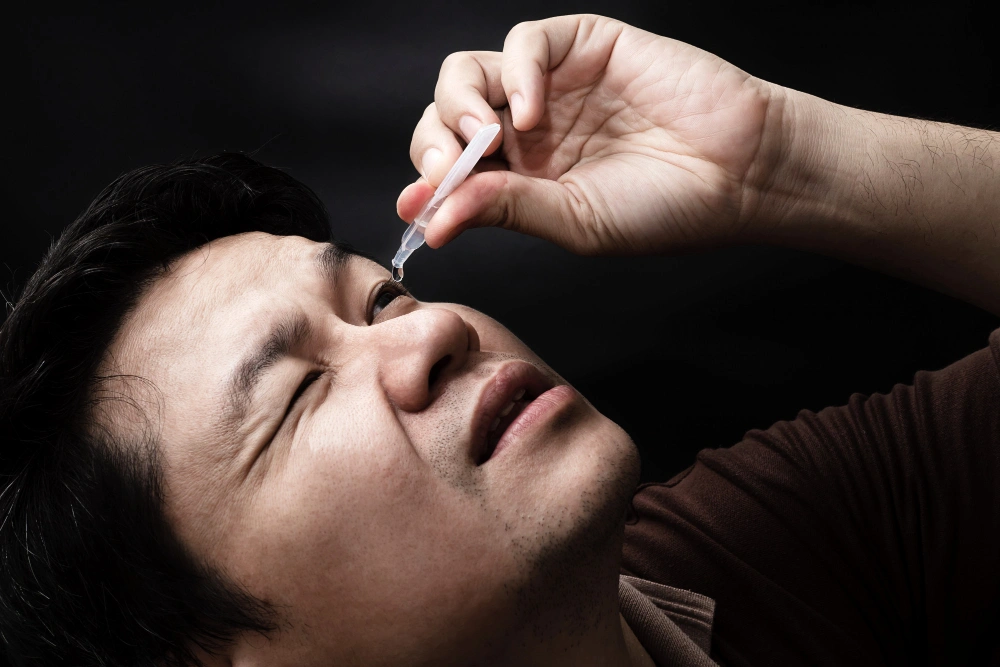
For a glaucoma treatment to be effective, proper application of the eye drops is advisable. Incorrect use can reduce the effectiveness of the eye drop and increase the risk of side effects. Here is a step-by-step guide to help you apply your eye drops correctly:
- Wash your hands. Always start with clean hands to prevent contamination of the eye or the bottle tip.
- Check the bottle. Make sure you have the correct bottle and that the tip is not damaged.
- Tilt your head back. Pull your lower eyelid down gently with your finger to create a small pocket.
- Squeeze out a single drop. Hold the bottle over your eye and squeeze out just one drop into the pocket of your lower eyelid. Be careful not to touch the tip of the bottle to your eye, eyelid, or eyelashes.
- Close your eye gently. Do not squeeze your eye shut, as this can force the drop out.
- Use punctual occlusion. This is a recommended method to maximise the drop’s effect. Gently press your finger on the inner corner of your eyelid, next to your nose. Hold it for 1-2 minutes. This blocks the tear duct, preventing the drop from draining into your nose and throat, which minimises systemic absorption and potential side effects.
- Clean up. Wipe away any excess fluid on your cheek with a clean tissue.
- Wait if using multiple drops. If you are prescribed more than one type of drop for the same eye, wait at least 5-10 minutes between each drop to allow the first one to be fully absorbed.
Following these practices may help ensure that your medication is working as intended, as it is a key part of your eye care routine.

Adherence and Long-Term Management
One of the challenges with glaucoma eye drops is often adherence to the treatment regimen. Because the condition is typically asymptomatic in its early stages, some individuals may not experience any improvement from taking the drops and might forget or stop using them. It is like taking blood pressure medication; it may feel like it is not working, but it may help prevent future, more severe problems.
That said, it is advisable to take your eye drops as prescribed, even if your eyesight feels fine. Stopping or skipping doses can cause your IOP to fluctuate, which may be detrimental to your optic nerve. To help with adherence, you can try:
- Setting reminders: Use alarms on your phone or a specific reminder app.
- Creating a routine: Take your drops at the same time each day, such as before brushing your teeth or after your morning coffee.
- Using a calendar: Mark off each day you have taken your drops.
If you experience any side effects, do not simply stop using the drops. Instead, contact your ophthalmologist to discuss your concerns. They may be able to adjust your dosage, recommend a different type of drop, or suggest a combination that is better suited to you.
In addition to long-term glaucoma management, other age-related eye conditions such as cataracts may also affect vision clarity. While eye drops help control eye pressure, blurred vision caused by lens clouding may require cataract removal surgery to restore clearer sight and support overall eye health.
Take an Active Role in Managing Glaucoma
When it comes to managing glaucoma, eye drops may be a helpful ally. They are recommended for managing intraocular pressure and helping to prevent further, irreversible vision loss. By understanding their purpose, applying them correctly, and adhering to your prescribed regimen, you take an active and essential role in your long-term eye health.
Remember to communicate openly with your ophthalmologist about any side effects or concerns. Proactive care and regular monitoring at an eye care clinic may help ensure a lifetime of optimal vision.