
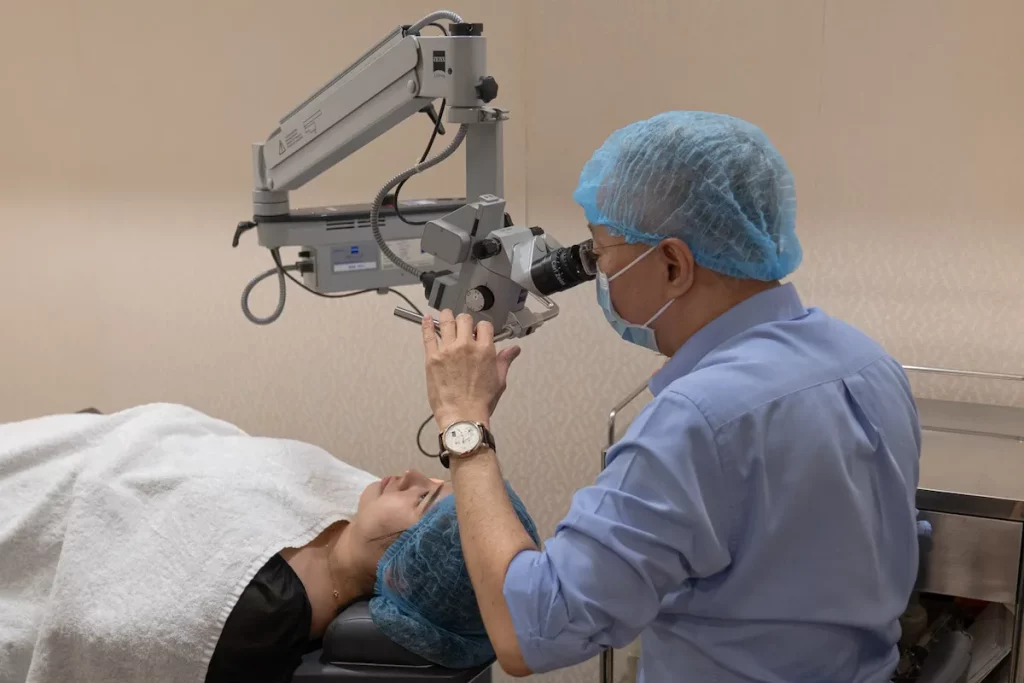
Written By Dr Christopher Khng, Senior Consultant Ophthalmologist
Last Updated: July 13, 2026
Overview
The most common problems after cataract surgery include dry eyes, double vision, raised eye pressure, inflammation and swelling, blurred vision, floaters, light sensitivity and posterior capsule opacification. Most are temporary and manageable, but a few symptoms need urgent attention.
Cataract surgery is one of the most commonly performed eye procedures, and serious complications are uncommon. Even so, it is normal to notice changes in the operated eye while it heals, and it helps to know the difference between expected side effects and signs that something needs a closer look.
What Is Normal After Cataract Surgery, and What Is Not
Some grittiness, mild watering, light sensitivity and fluctuating vision are a normal part of recovering from cataract surgery in the first days, and they usually settle as the eye heals. The table below is a quick guide to what is typically expected and what should prompt a call to your clinic.
| Symptom | Usually part of normal healing | Contact your specialist if |
|---|---|---|
| Blurred or fluctuating vision | Common in the first days to weeks as the eye settles | Vision suddenly worsens, or blurring persists beyond a few weeks |
| Grittiness, mild irritation or watering | Common in the first week or two | Discomfort is worsening rather than easing, or there is discharge |
| Light sensitivity and mild glare | Common early on; sunglasses help | Severe light sensitivity with pain or redness |
| Mild ache around the eye | Possible in the first day or two | Persistent or intense pain that does not respond to simple pain relief |
| Occasional floaters | Small floaters can be more noticeable after surgery | A sudden shower of new floaters, flashes of light or a shadow in your vision |
8 Common Complications After Cataract Surgery
Complication rates after modern cataract surgery are low, and most issues that do occur are temporary and treatable, particularly when they are picked up early at your follow-up visits. Here are the eight most common, roughly in the order patients tend to notice them.
1. Dry Eyes and Irritation
Dry eye is one of the most frequent complaints after cataract surgery. The procedure can temporarily disrupt the tear film and the tiny nerves on the eye’s surface, leading to grittiness, burning, mild redness and a sensation that something is in the eye. Symptoms usually improve over weeks to months.
Management: prescribed lubricating drops used regularly, breaks from screens, and protecting the eyes from wind and air-conditioning. If you had dry eyes before your operation, mention it at your reviews: pre-existing dry eye disease can make symptoms more noticeable, and cataract surgery with ocular surface disease is usually planned with extra care for the eye’s surface before and after the operation.
2. Double Vision (Diplopia)
Seeing two images of a single object, known as diplopia, can be unsettling after cataract surgery, but it is usually temporary. In the first days it is often caused by the anaesthetic wearing off, mild swelling, or the brain adjusting to a large improvement in vision in the operated eye. As the eye settles and both eyes learn to work together again, the double vision typically fades.
If double vision persists beyond the first couple of weeks, it needs a proper assessment to identify the cause, which can include a muscle imbalance between the eyes or an uncorrected difference in prescription. Depending on the cause, management may involve updated glasses, temporary prism lenses that realign the two images, or eye muscle exercises prescribed by your specialist. Exercises help in selected cases only, so it is worth being assessed before trying anything on your own. In a small number of persistent cases, further treatment may be considered.
See your eye specialist promptly if double vision appears suddenly, worsens, or is accompanied by pain or a drooping eyelid.
3. High Eye Pressure
A temporary rise in eye pressure is relatively common in the first hours to days after surgery, often caused by inflammation, retained viscoelastic gel used during the procedure, or a response to steroid eye drops. Symptoms of high eye pressure after cataract surgery can include aching or pain in or around the eye, headache, nausea, blurred vision and halos around lights, although mild rises often cause no symptoms at all, which is why pressure is checked at your follow-up visits.
Management: pressure-lowering eye drops or a short course of tablets usually bring it down, and your drop regime may be adjusted. Sustained high pressure matters because it is a risk factor for glaucoma, so patients with existing glaucoma or other risk factors are monitored more closely.
4. Inflammation, Pain and Swelling
Some inflammation is a normal part of healing and is controlled with the anti-inflammatory drops prescribed after surgery. Signs it is more than expected include increasing redness, aching pain, worsening light sensitivity and vision becoming blurrier rather than clearer. Is cataract surgery painful? The procedure itself is not, and significant pain afterwards is not typical, so persistent or intense pain should always be reported.
Occasionally, swelling can affect the cornea at the front of the eye or the macula at the back (cystoid macular oedema), both of which can blur vision in the weeks after surgery. Both are usually treatable with drops or other medication once identified, which is one of the main purposes of your scheduled reviews.
5. Blurred or Fluctuating Vision
Blurry vision after cataract surgery is expected in the first days and often fluctuates for a few weeks while the eye heals and adapts to the new lens. How long vision stays blurry varies: many people notice a clear improvement within a week, while full stability can take several weeks.
Blurring that persists beyond this, gets worse after initially improving, or arrives suddenly is different, and can point to swelling, raised pressure, a prescription that needs updating, or posterior capsule opacification (covered below). Persistent blur is investigated at your review rather than assumed to be normal.
6. Floaters and Flashes
Isolated vitreous floaters, small drifting specks or cobweb-like shapes, are common and often more noticeable after surgery simply because vision is clearer. Floaters that drift with eye movement are usually harmless and tend to become less noticeable with time.
A sudden increase in floaters, flashes of light, or a dark shadow or curtain across your vision is different: these can be signs of retinal detachment, which is uncommon but needs emergency assessment the same day.
7. Light Sensitivity, Glare and Flickering Vision
Increased sensitivity to light is common in the first weeks and usually settles; sunglasses help outdoors. Some patients also notice glare, halos or streaks around lights at night, particularly with certain lens types, and these effects tend to reduce as the brain adapts.
Flickering vision after cataract surgery, a shimmering or fluttering sensation at the edge of vision, is also reported occasionally and is usually harmless and temporary. Mention it at your follow-up so it can be checked, and seek review promptly if flickering is accompanied by new floaters or flashes.
8. Posterior Capsule Opacification (Secondary Cataract)
Posterior capsule opacification, often called a secondary cataract, is the most common late complication of cataract surgery. Months or even years after an initially successful operation, the thin capsule that holds the artificial lens can become cloudy, causing gradually blurring vision and glare that feel like the cataract returning. The original cataract cannot come back, but PCO can mimic it closely.
PCO is treatable with a short laser procedure: a YAG laser capsulotomy creates a small opening in the cloudy capsule so light can pass through clearly again, usually in a single clinic visit.
When to Seek Help Urgently
Most post-surgery symptoms are mild and settle with routine care. Contact your clinic the same day, or seek urgent medical attention, if you experience any of the following after cataract surgery:
- A sudden decrease in vision or loss of vision
- Persistent or intense eye pain that does not improve with simple pain relief
- Increasing redness, swelling or discharge from the eye, which can be signs of infection
- A sudden shower of new floaters, flashes of light, or a shadow or curtain over your vision, which can indicate retinal detachment
Serious infection inside the eye (endophthalmitis) is rare, but it progresses quickly, which is why new pain with worsening vision and redness should never be watched and waited on. It is always better to have a symptom checked early than to wait for your next scheduled appointment.

How Post-Surgery Complications Are Monitored at EyeWise
Follow-up reviews are usually scheduled at 1 day, 1 week and 1 month after surgery. At each visit, vision, eye pressure and healing are checked so that problems such as inflammation, pressure rises or swelling are picked up and treated before they affect your result. Between visits, you are encouraged to call the clinic about any symptom that does not feel right rather than waiting. Protecting your result over the longer term also comes down to everyday habits, and diet and nutritious foods influence eye health more than many people expect.
Noticed a Change After Your Cataract Surgery?
If something about your vision or comfort does not feel right after cataract surgery, it is worth having it checked, whether your operation was with us or elsewhere. Dr Christopher Khng and the team assess and manage post-surgery complications, from routine concerns to complex cases, as part of the full cataract surgery care at EyeWise, from screening through to follow-up. Contact the clinic to arrange an assessment.