
Eye Flashes and Floaters in Singapore: Causes, Symptoms and Treatment
Seeing flashes of light, floating spots, threads or shadows drifting across your vision? These symptoms are common, especially in people with myopia or age-related changes inside the eye.

Dr. Christopher Khng
- Medical Director, Senior Consultant Ophthalmologist
- MBBS, M.Med(Ophth), FRCS(Edin), AMS(Ophth 2003)
Table of Contents
- Overview
- What Are Floaters and Flashes?
- Why Floaters Happen: Vitreous Syneresis and PVD
- Why Eye Flashes Happen
- Common Causes of Eye Flashes and Floaters
- When Are Flashes and Floaters an Emergency?
- Why Myopia Increases the Risk of Flashes and Floaters
- Treatment for Eye Flashes and Floaters
- Assessment at EyeWise Vision Clinic
- Concerned About Flashes or Floaters?
- Frequently Asked Questions
- Get in Touch
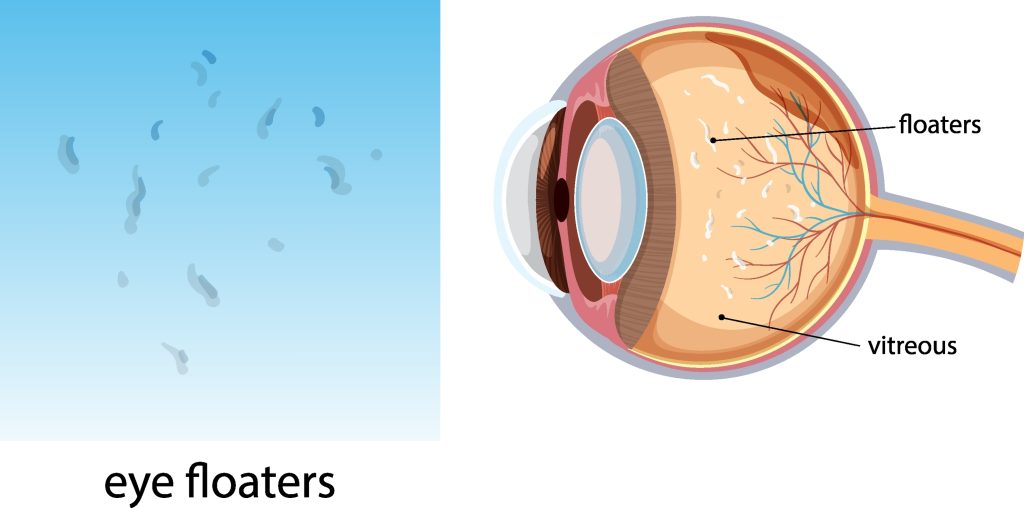
- Floaters and flashes are usually caused by natural changes in the vitreous gel, the transparent jelly that fills the eye.
- They can sometimes be early warning signs of retinal tears, retinal detachment or vitreous haemorrhage.
- New or persistent flashes and floaters should be assessed promptly to exclude sight-threatening conditions.
- Most floaters are benign and become less noticeable over time through neuroadaptation.
- A comprehensive retinal examination helps determine the cause and whether treatment is required.
The specialist leading your care
Our Eye Surgeon

Dr Christopher Khng
Medical Director, Senior Consultant OphthalmologistMBBS, M.Med(Ophth), FRCS(Edin), AMS(Ophth 2003)
Dr Christopher Khng is a Senior Consultant Ophthalmologist with extensive experience diagnosing and treating retinal diseases, including retinal detachment, retinal tears, diabetic retinopathy, and macular disorders.
Dr Khng began his medical education at the University of Aberdeen, Scotland, where he received several academic distinctions, including the Leslie Durno Prize, Alexander Smith Cardno Prize, and Munday and Venn Prize in Medicine. He subsequently completed his medical degree at the National University of Singapore (NUS).
Prior to private practice, he served at leading eye institutions including the Singapore National Eye Centre (SNEC) and Tan Tock Seng Hospital. Drawing on years of specialist training and surgical experience, he provides comprehensive care for patients with retinal conditions, guiding them through every stage of diagnosis, treatment, and recovery.
Dr Christopher Khng
Medical Director, Senior Consultant Ophthalmologist MBBS, M.Med(Ophth), FRCS(Edin), AMS(Ophth 2003)
What Are Floaters and Flashes?
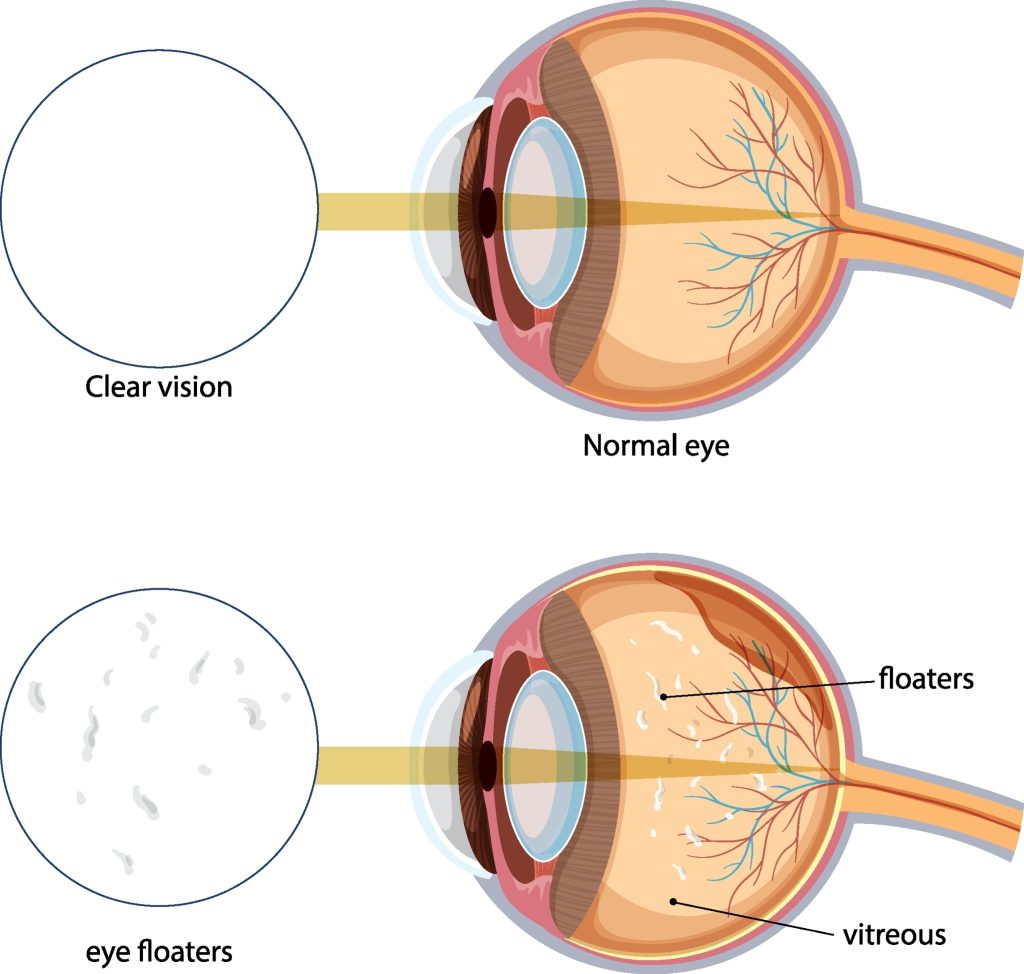
Eye floaters are small spots, threads, cobwebs or shadows that drift across your vision, while eye flashes are brief flickers or streaks of light seen without an external light source. They are commonly caused by changes in the vitreous gel inside the eye, but sudden onset symptoms may indicate a retinal tear or retinal detachment and should be assessed promptly.
Floaters occur when tiny clumps form within the vitreous humour, the clear gel that fills the eye. These clumps cast shadows onto the retina, creating the appearance of moving spots or shapes, especially against bright backgrounds.
Flashes occur when the vitreous gel pulls on the retina, stimulating the light-sensitive cells at the back of the eye. They are often described as sparks, lightning streaks or flickering lights and may occur alongside new floaters.
Why Floaters Happen: Vitreous Syneresis and PVD
Inside every eye is a gel-like substance called the vitreous humour. As we age, or as myopia stretches the eyeball, this gel slowly liquefies. Its collagen fibres can collapse into small floating clumps, a process known as vitreous syneresis.
When light enters the eye, these clumps cast tiny shadows onto the retina. Your brain interprets those shadows as shapes drifting through your vision.
What is Posterior Vitreous Detachment (PVD)?
As vitreous syneresis progresses, the vitreous gel may separate from the retina. This is called Posterior Vitreous Detachment (PVD).
PVD is one of the most common causes of new floaters and flashes, especially in adults over 40 and people with high myopia. When the vitreous separates near the optic nerve, it may leave behind a large ring-shaped floater called a Weiss Ring, often seen as a circular shadow in the centre of vision.
Most Posterior Vitreous Detachments are benign. However, if the vitreous pulls too strongly on the retina during separation, it can create a retinal tear. This is why new flashes or floaters should be assessed promptly.
Why Do Floaters Move When I Move My Eyes?
Floaters are suspended in the vitreous fluid, so they move with your eye movements and may lag slightly behind. They are usually more visible against bright, plain backgrounds and less noticeable in dim light or visually busy environments.
Why Eye Flashes Happen

Eye flashes occur when the retina is stimulated, often because the vitreous gel is tugging on it.
During PVD, the vitreous can pull on the light-sensitive retina and create the sensation of flashing lights. Any new onset of flashes should be assessed promptly, especially if they are frequent, worsening or accompanied by new floaters.
Flashes can also be linked to retinal tears, retinal detachment and eye trauma.
Common Causes of Eye Flashes and Floaters
Posterior Vitreous Detachment (PVD)
Retinal Tear
Retinal Detachment
Other Possible Causes
When Are Flashes and Floaters an Emergency?

Most flashes and floaters are caused by benign vitreous changes. However, some are warning signs of retinal tears, retinal detachment or bleeding inside the eye.
Seek urgent assessment if you experience:
- Sudden onset of many new floaters
- New or persistent flashing lights
- A dark curtain or shadow in your vision
- Sudden blurred or reduced vision
- Reddish or blood-tinged floaters
- New symptoms after an eye injury
Flashes of Light (Photopsia)
Flashes of light, also known as photopsia, may occur when the vitreous tugs on the retina during PVD.
Occasional brief flashes can occur during an active PVD. Persistent, worsening or frequent flashes should be assessed urgently.
A Sudden Shower of Floaters
A sudden, dramatic increase in floaters can be a sign of vitreous haemorrhage or retinal tear, especially if the floaters appear dark, reddish or like a cloud of tiny dots.
A Shadow or Curtain in Your Vision
A dark curtain, veil or shadow moving across your vision is a classic warning sign of retinal detachment. Do not wait for it to improve on its own.
Why Myopia Increases the Risk of Flashes and Floaters
Singapore has one of the highest rates of myopia in the world. Many Singaporeans develop moderate or high myopia from a young age.
High myopia changes the shape of the eye. As the eyeball elongates, it places more strain on the vitreous gel and retina. This can accelerate vitreous syneresis and cause PVD to occur earlier than it would in a non-myopic eye.
This is why some myopic Singaporeans develop flashes and floaters in their 20s and 30s, even though these symptoms are more commonly associated with older adults.
High Myopia and Retinal Risk
High myopia does more than increase your spectacle prescription. It can also increase the risk of retinal tears, retinal holes and retinal detachment.
For patients with high myopia, a dilated retinal examination is often recommended to ensure there are no retinal tears or other complications.
Treatment for Eye Flashes and Floaters
Treatment depends on the underlying cause. Many flashes and floaters can be safely monitored once serious retinal conditions have been excluded.
If there is a retinal tear, retinal detachment, vitreous haemorrhage or active inflammation, treatment will focus on the underlying condition. If the retina is healthy but floaters remain visually disruptive, treatment options may be discussed.
Observation and Reassurance
Many floaters, once confirmed as benign through a dilated retinal examination, do not require active treatment.
Over time, the brain often adapts through a process called neuroadaptation, making floaters less noticeable.
Laser Vitreolysis (YAG Laser)
For selected patients with large, persistent and visually disruptive floaters, YAG laser vitreolysis may be considered.
The laser targets the floater directly, breaking it into smaller particles that are less noticeable.
Vitrectomy (Surgical Removal)
For severe, vision-impairing floaters or floaters associated with other retinal pathology, vitrectomy may be considered.
Vitrectomy removes the vitreous gel and replaces it with a clear fluid. It is the most definitive treatment option but is generally reserved for carefully selected cases due to the risks associated with surgery.
Assessment at EyeWise Vision Clinic
What to Expect During Your Assessment
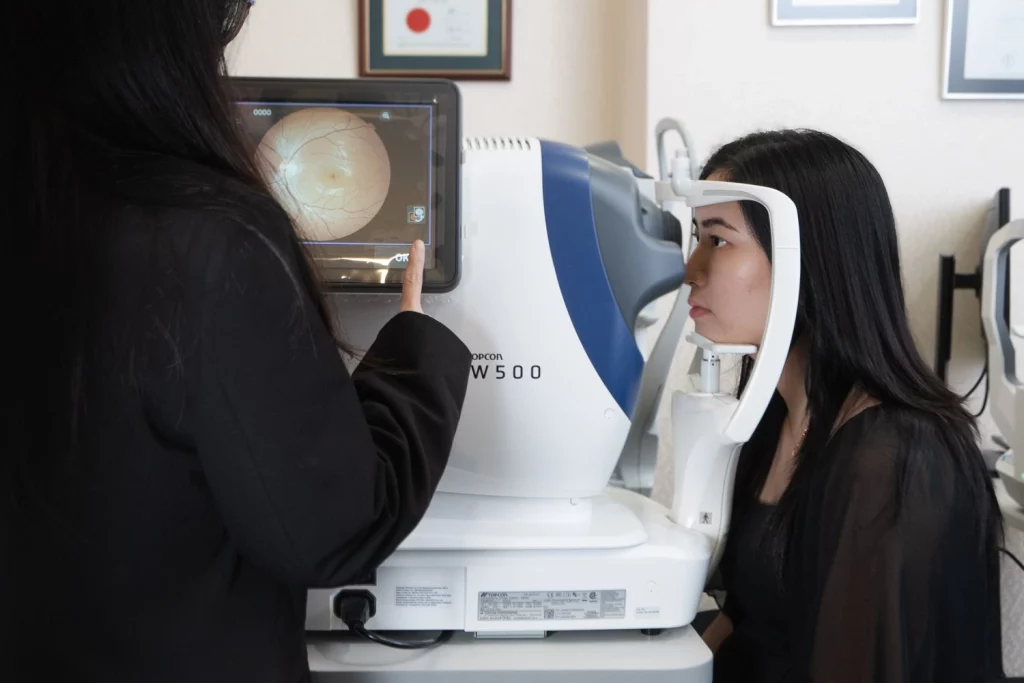
Your consultation includes a detailed discussion of your symptoms, a vision assessment and a comprehensive dilated retinal examination. Depending on your findings, retinal imaging such as Optical Coherence Tomography (OCT) or ultrasound may be recommended.
Following the assessment, Dr Christopher Khng will explain the cause of your symptoms and recommend observation, treatment or further investigation where necessary.
Specialist Assessment and Personalised Care
- Assessment by Dr Christopher Khng, Senior Consultant Ophthalmologist
- Comprehensive dilated retinal examination
- Advanced retinal imaging technology
- YAG laser vitreolysis for suitable candidates
- Vitreoretinal surgical expertise
- Evidence-based recommendations tailored to your individual needs
Concerned About Flashes or Floaters?
Frequently asked questions
Patient Information
Can eye floaters be permanently removed?
Yes. Vitrectomy can remove floaters by removing the vitreous gel. Laser vitreolysis can also reduce selected floaters such as Weiss Rings. Many benign floaters become less noticeable over time through neuroadaptation.
Will floaters go away on their own?
Floaters may not disappear completely, but many become less noticeable over time. This happens as floaters settle and the brain adapts to them.
Can eye floaters cause permanent vision loss?
Benign floaters from PVD do not cause permanent vision loss. However, floaters linked to retinal tears, retinal detachment or vitreous haemorrhage can threaten vision if untreated.
When should I see a doctor for flashes and floaters?
Are flashes always a sign of retinal detachment?
No. Flashes commonly occur during PVD and do not always mean retinal detachment. However, new flashes should be assessed to exclude retinal tears or retinal detachment.
What is the difference between PVD and retinal detachment?
PVD is usually benign, while retinal detachment is a sight-threatening emergency. PVD occurs when the vitreous separates from the retina. Retinal detachment occurs when the retina itself separates from the back wall of the eye.
Contact Us
For enquiries or to request an assessment, please complete the form below or call our clinic: (65) 6476 1211
Our team will get back to you to assist with your request.