
Cataract Surgery Singapore
A Guide to Cataract Symptoms, Treatment, Costs and Recovery

Dr. Christopher Khng
- Medical Director, Cataract Surgery Specialist
- MBBS, M.Med(Ophth), FRCS(Edin), AMS(Ophth 2003)
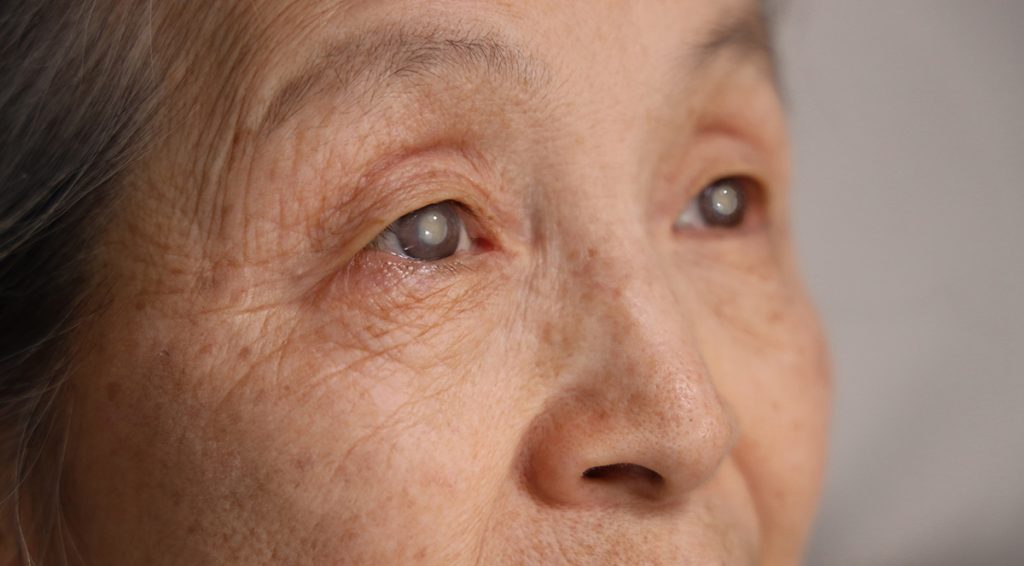
Table of Contents
- Dr Christopher Khng: Cataract Specialist
- What is a Cataract?
- Causes & Symptoms Of Cataract
- Types of Cataracts
- What happens if cataracts are left untreated?
- When is cataract surgery necessary?
- Cataract IOL Lens Options
- Cataract Screening: What happens at your eye check-up
- How is cataract surgery performed?
- Types of Cataract Surgery
- What to expect during and cataract surgery
- Cataract Surgery Cost in Singapore
- Guiding your cataract care at EyeWise Vision Clinic
- Frequently Asked Questions
- Contact Us
A cataract is the clouding of the eye’s natural lens, leading to blurred vision, glare, and reduced visual clarity. It develops gradually and is one of the most common age-related eye conditions. Cataract surgery is the only effective treatment to restore clear vision once symptoms begin to affect daily life.
Cataracts are a major cause of visual impairment worldwide, with prevalence increasing as populations age. In Singapore, cataracts affect a significant proportion of older adults—rising from over 60% in those aged 60–64 to more than 90% in individuals aged 75 and above.
Despite this, up to two-thirds of vision-impairing cataracts in Singaporean adults remain undiagnosed. Early assessment by a cataract specialist allows timely intervention, helping to preserve vision, independence and quality of life.
The specialist leading your care
Our Cataract Surgeon

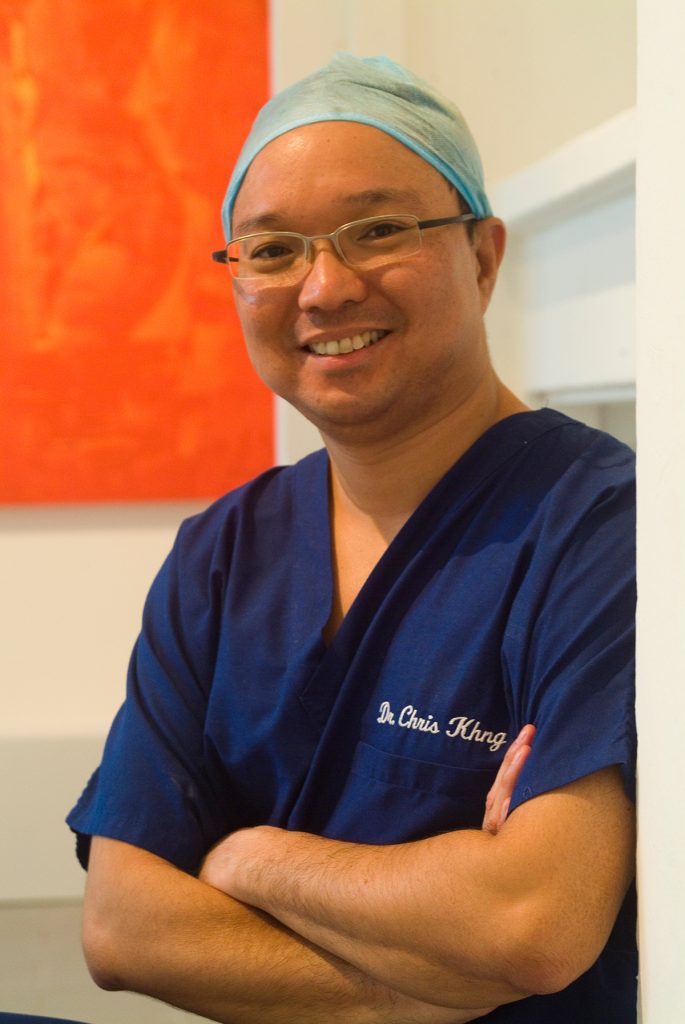
Dr Christopher Khng
Medical Director, Senior Consultant Ophthalmologist & Cataract SpecialistMBBS, M.Med(Ophth), FRCS(Edin), AMS(Ophth 2003)
Dr Christopher Khng is a fellowship-trained eye specialist based in Singapore, specialising in complex cataract surgery, anterior segment reconstruction, bladeless cataract techniques and advanced intraocular lens implants.
Dr Khng graduated from the National University of Singapore (NUS), following his initial medical training at Aberdeen University in Scotland, where he received academic distinctions in medicine.
In 2003, he was awarded a Singapore Ministry of Health scholarship to pursue advanced subspecialty training in complex cataract and anterior segment reconstruction surgery under internationally renowned eye surgeons at the Oregon Eye Institute and Cincinnati Eye Institute.
He later received the Best Paper of Session award at the American Society of Cataract & Refractive Surgery (ASCRS) annual meeting in Washington, D.C. in 2005 for his research on the eye’s crystalline lens.
Dr Khng has contributed to ophthalmology textbooks and peer-reviewed journals, and collaborated with major ophthalmic instrument manufacturers in the United States to develop surgical instruments that improve precision during cataract surgery, including astigmatism correction techniques.
Dr Khng treats a wide range of cataract conditions, from routine cases to those requiring specialised surgical techniques such as iris repair and advanced intraocular lens procedures. He is committed to providing personalised care aimed at achieving the best possible visual outcomes.
Dr Christopher Khng
Medical Director, Senior Consultant Ophthalmologist & Cataract SpecialistMBBS, M.Med(Ophth), FRCS(Edin), AMS(Ophth 2003)
What is a Cataract?
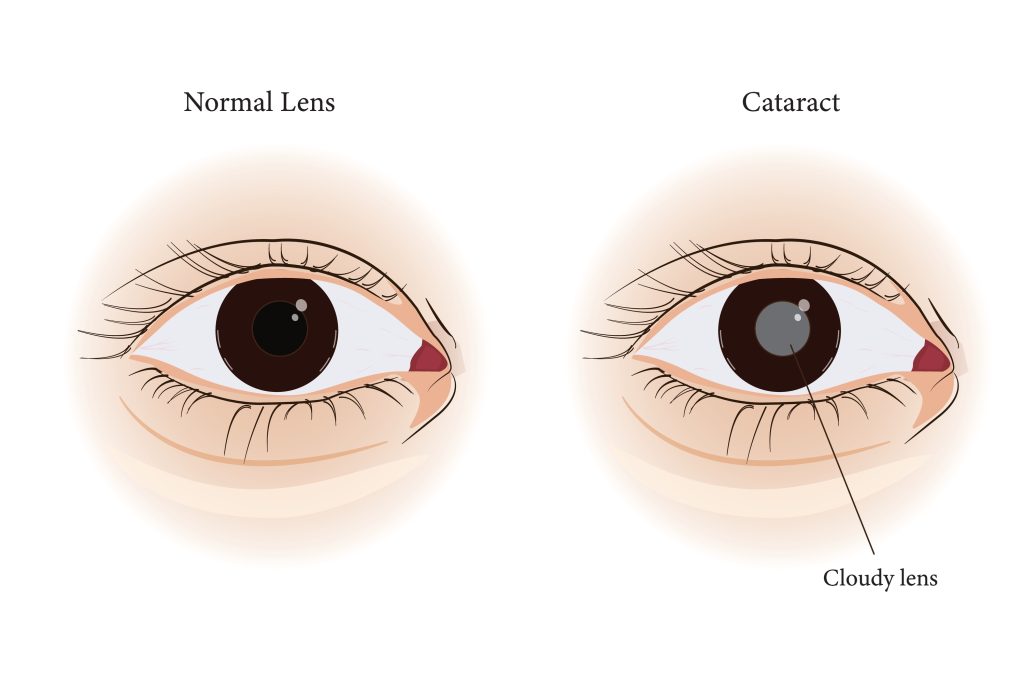
A cataract occurs when the eye’s natural lens gradually becomes cloudy, affecting how light is focused onto the retina:
This clouding is commonly caused by changes in lens proteins over time, leading to blurred or hazy vision. Even early cataracts can affect contrast sensitivity and colour perception, sometimes before significant blurring of vision is noticed.
While cataracts are most commonly associated with ageing, they are not limited to older adults. Cataracts may also develop following eye injury, inflammation or previous eye surgery, and in some cases may be present from birth.
In regions with limited access to eye care, cataracts remain a significant cause of visual impairment.
Certain medical and lifestyle factors are associated with earlier cataract development. These include high myopia (short-sightedness), diabetes, prolonged steroid use, eye trauma and smoking.
Identifying these risk factors early allows for appropriate monitoring and timely intervention when vision becomes affected.
What Causes Cataracts?
While ageing is the main cause of cataracts, other factors can also contribute to their development, including:
- Diabetes
- Obesity
- Prolonged exposure to ultraviolet (UV) light and other types of ionising radiation
- Long-term use of certain medications, such as corticosteroids and oral steroids
- Eye injuries or trauma
- A family history of cataracts (congenital)
- Smoking and alcohol consumption
- High myopia (short-sightedness)
- Previous eye surgery or eye inflammation
Symptoms of Cataracts
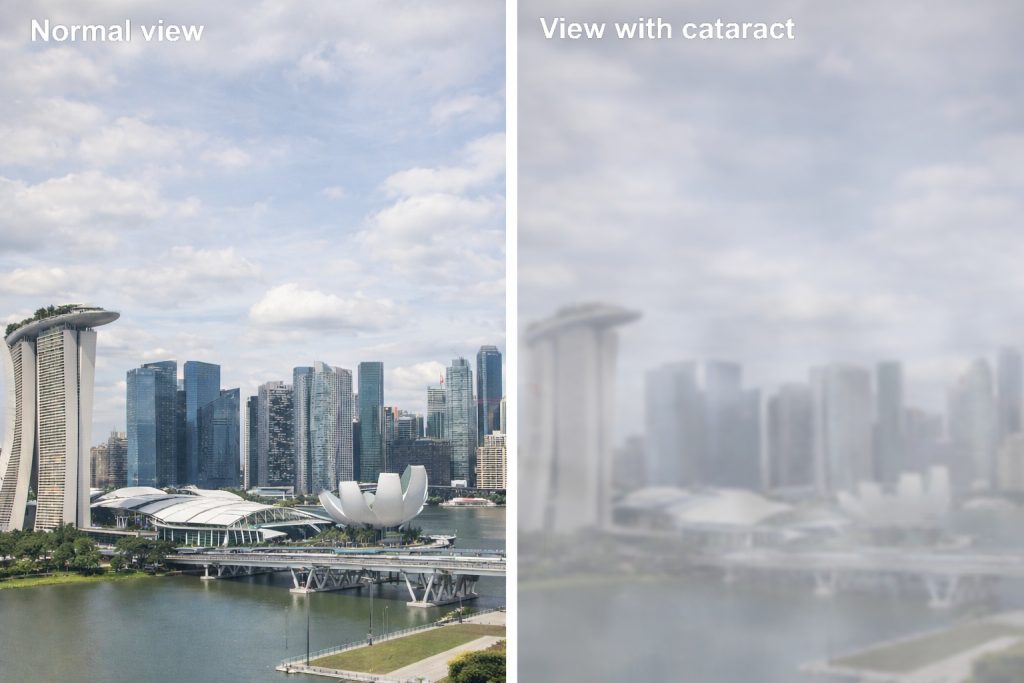
The presence of a cataract often starts with a gradual blurring or clouding of vision. As the condition progresses, individuals may also experience:
Seeing halos or a glare around lights
Difficulty seeing clearly in dim light or when driving at night
Double vision
Frequent changes to spectacle or contact lens prescriptions
Colours appearing faded, less vibrant, or taking on a brown or yellow tint
Increased sensitivity to bright lights and glare
While cataracts are generally not associated with pain, redness or discomfort, it is important to note that rare cases can involve elevated intraocular pressure, which may lead to symptoms such as eye pain and nausea.
Types of Cataract
There are different types of cataracts, each affecting vision in different ways. A cataract specialist can identify the specific type and its progression to recommend the most appropriate course of management.
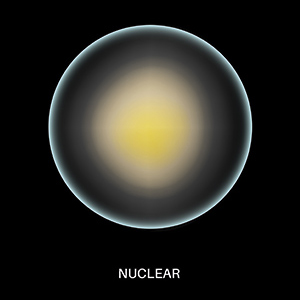
- Nuclear Cataracts: These develop in the centre (nucleus) of the lens. In the early stages, distant objects will appear blurry, while close-up vision remains relatively clear. Some individuals might even experience a temporary improvement in reading vision. However, as the cataract progresses, the lens can take on a yellow or brown tint, making it harder to distinguish colours.
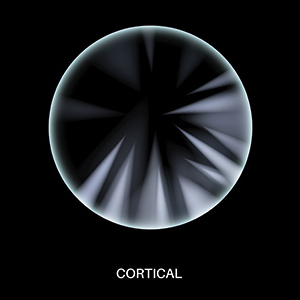
- Cortical Cataracts: These form around the edges of the lens cortex. They typically begin as white, wedge-shaped streaks or spots that gradually extend toward the centre of the lens. As the opacities develop, they interfere with light passing through the lens, leading to increased visual disturbances.
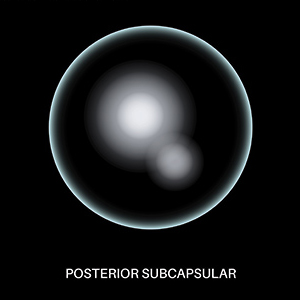
- Posterior Subcapsular Cataracts: These happen at the back of the lens, directly in the path of incoming light. They often begin as a small, opaque area and can progress rapidly. This type of cataract commonly affects reading vision, causes sensitivity to bright light and may produce glare or halos around lights, especially noticeable at night.
What Happens If Cataracts Are Left Untreated?
Cataracts progress gradually over time:
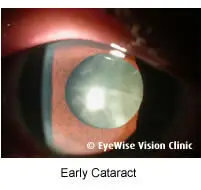
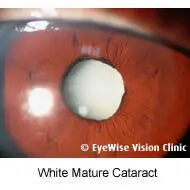
In the early stages, changes in vision may be subtle, but as the lens becomes increasingly cloudy, vision can worsen, with reduced clarity, contrast and colour perception.
If cataracts continue to progress without monitoring or treatment, they may begin to interfere with daily activities such as reading, driving or recognising faces. Vision may appear dimmer or more blurred, affecting safety and quality of life.
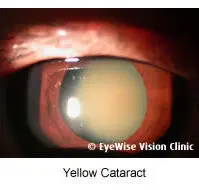
In more advanced cases, cataracts may become denser, leading to more pronounced visual impairment. Rarely, advanced cataracts may be associated with raised intraocular pressure, which can cause discomfort or other symptoms.
When Is Cataract Surgery Necessary?
Surgical treatment for cataracts is considered when vision loss begins to affect daily activities or overall quality of life.
In some cases, surgery may also be recommended if a cataract interferes with the assessment or management of other eye conditions, such as diabetic retinopathy or age-related macular degeneration (AMD).
Assessment at an earlier stage allows cataracts to be monitored, surgical planning to be optimised and treatment to be timed appropriately—often before vision is significantly compromised.
When cataracts are present in both eyes, surgery is usually performed one eye at a time, with the second procedure scheduled a few weeks later, depending on individual needs and recovery.
Choosing Your Lens: Which IOL is Right for You?
Different intraocular lens (IOL) lens options are available to address a range of visual needs.
Cataract surgery not only removes the cloudy natural lens, but depending on the type of intraocular lens selected, may also reduce dependence on glasses for Myopia (Short-sightedness), Hyperopia (Long-sightedness), Presbyopia ("Lao Hua") and Astigmatism.
| Lens Type | Best For | Pros | Cons | Night Vision |
|---|---|---|---|---|
| Monofocal | Patients who don't mind wearing reading glasses. |
|
| Excellent |
| Toric | Patients with Astigmatism. |
|
| Excellent |
| Multifocal / Trifocal | Independence from glasses (Far, Intermediate & Near). |
|
| Good (may have halos) |
| EDOF (Extended Depth of Focus) | Active lifestyles (Computer work + Driving). |
|
| Very Good |
When It Helps to See a Surgeon Experienced in Complex Cataract Cases
Cataract surgery is one of the most commonly performed eye procedures. However, not every case is straightforward. Some patients have pre-existing eye conditions or anatomical differences that require additional planning and surgical care.
Dr Christopher Khng has extensive experience managing complex cataract cases. Careful pre-operative assessment and precise surgical technique are especially important in these situations to help reduce risk and support a smoother recovery.
Complex Cases May Include:
- High Myopia (Severe Short-sightedness): May require more precise IOL calculations and careful retinal assessment.
- Subluxated (Unstable) Lenses: Weak lens support due to ageing, trauma or certain conditions may require additional stabilising techniques.
- Small Pupils & Floppy Iris Syndrome: Often linked to certain prostate medications and may require modified surgical techniques.
- Hard/Mature Cataracts: Denser cataracts can be more technically demanding and require careful corneal protection.
If you have been told your cataract may be more complex, a thorough evaluation can help clarify your options.
Cataract Screening: What Happens at Your Eye Check-up
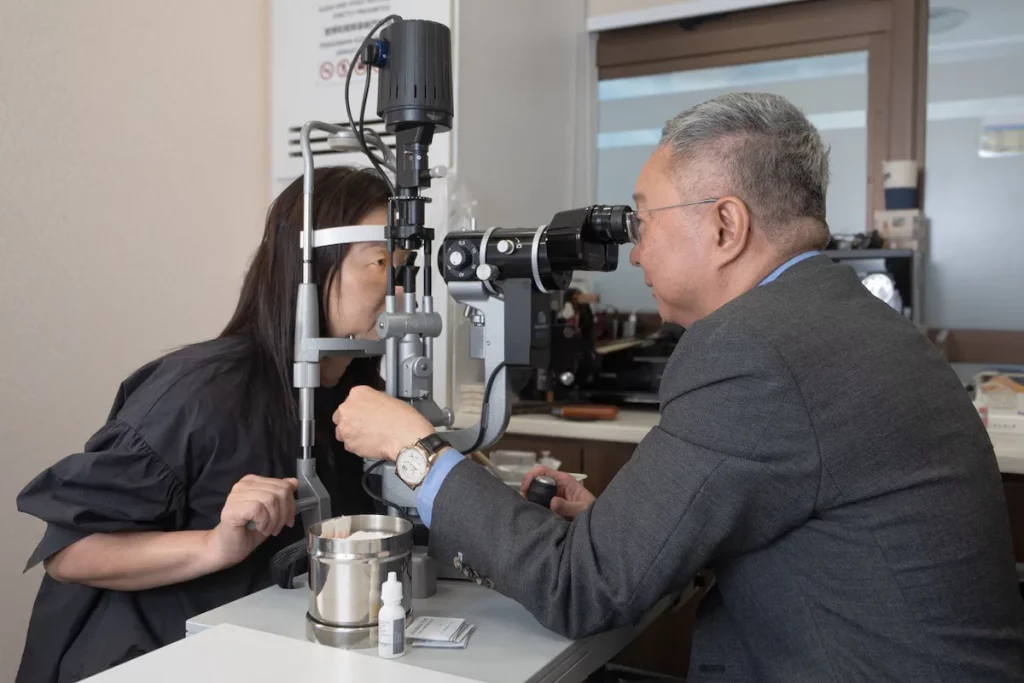
A cataract screening is a structured eye examination used to assess vision and identify changes in the lens. It is typically completed during a single clinic visit.
The assessment may include:
- Prescription assessment to evaluate current visual clarity
- Intraocular pressure measurement to screen for raised eye pressure
- Pupil dilation and lens examination to assess for cataracts and other eye conditions
Once the pupils are dilated, the lens is examined using a slit lamp and photographs may be taken for documentation. The findings are then explained and appropriate management options discussed.
How Is Cataract Surgery Performed?
Cataract surgery involves removing the eye’s cloudy natural lens and replacing it with an artificial lens, known as an intraocular lens (IOL). The procedure is commonly performed as a day surgery, allowing patients to return home on the same day.
The operation is carried out under local anaesthesia and is generally well tolerated. Modern surgical techniques allow the cataract to be removed through a small incision, after which the intraocular lens is inserted to restore focus and clarity of vision.
Types of cataract surgery
Several surgical techniques may be used to remove a cataract. The most suitable approach depends on factors such as:
The density of the cataract
Eye anatomy
Individual clinical considerations
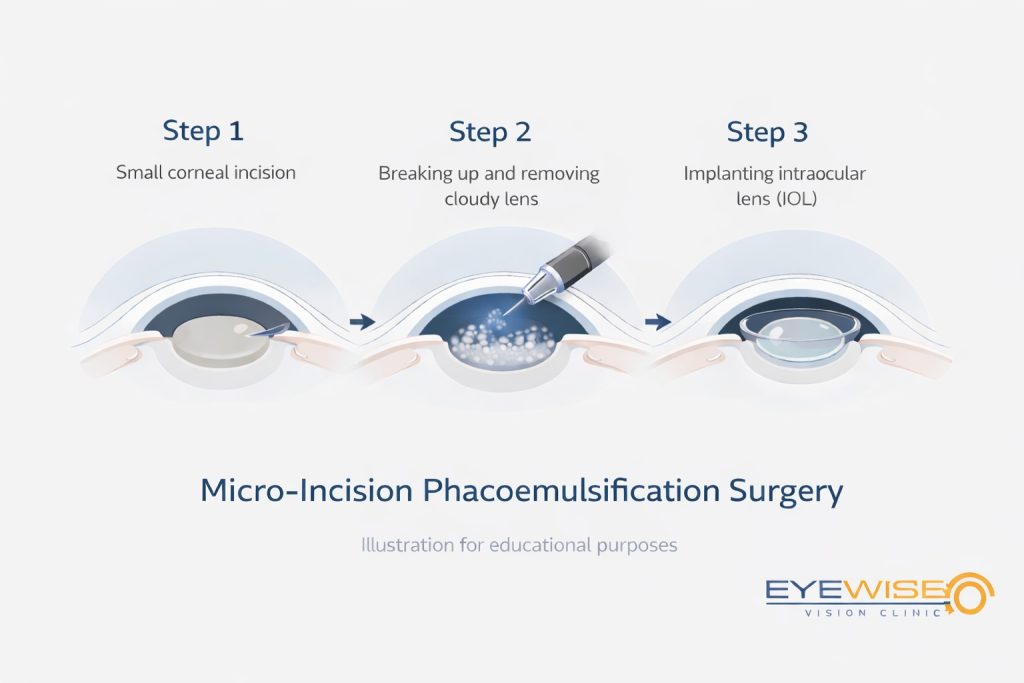
Micro-Incision Phacoemulsification
Micro-incision phacoemulsification is the most commonly performed cataract surgery. This technique uses ultrasound energy to break up (emulsify) the cataract, allowing it to be removed through a small incision in the eye.
Once the cloudy lens is removed, a synthetic intraocular lens (IOL) is inserted through the same incision. The incision is designed to be self-sealing, which helps reduce surgical trauma and supports faster recovery.
Femtosecond Laser-Assisted Cataract Surgery (FLACS)
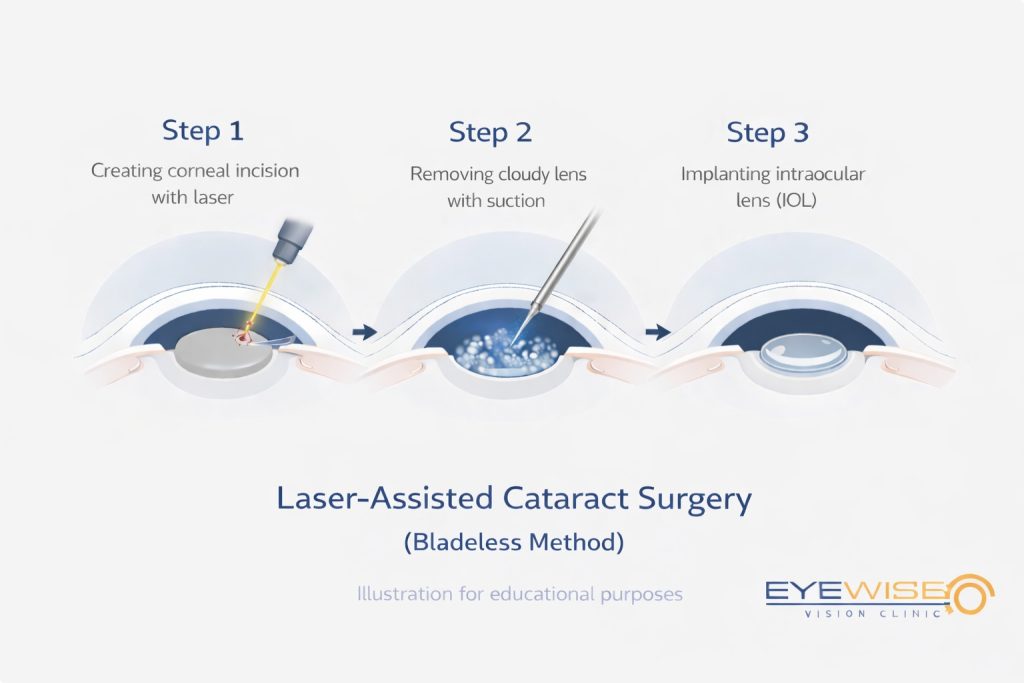
Femtosecond laser-assisted cataract surgery (FLACS) uses a laser to perform selected steps of the procedure, such as creating the initial incision, opening the lens capsule, and softening the cataract for removal.
By automating parts of the surgery, the laser can enhance precision and consistency in selected cases. FLACS may be recommended based on individual eye characteristics and surgical considerations.
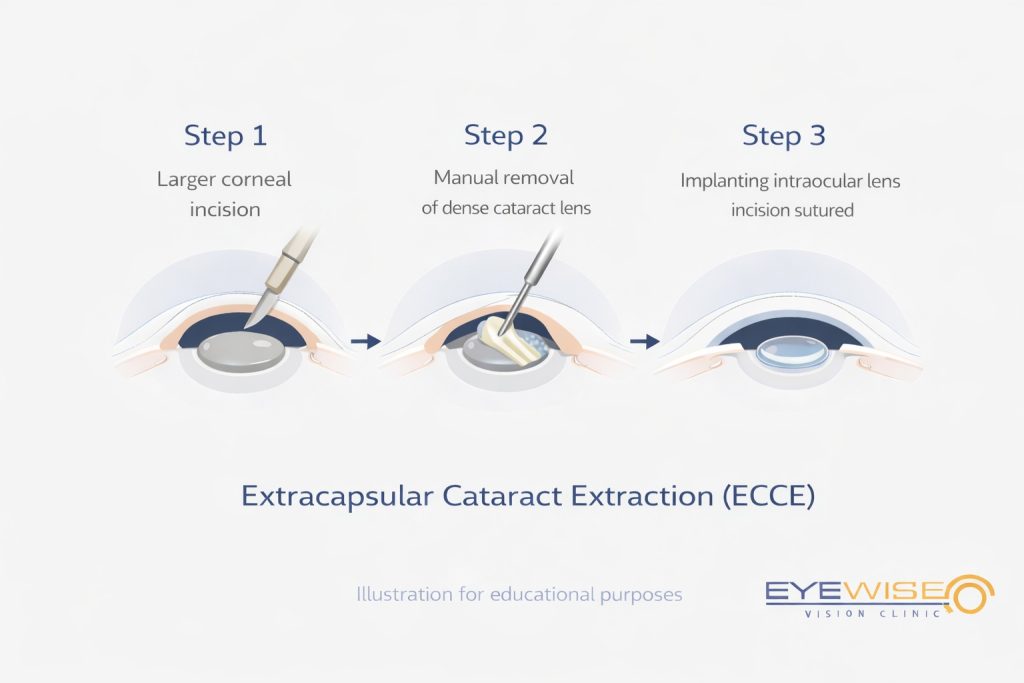
Extracapsular Cataract Extraction (ECCE)
Extracapsular cataract extraction (ECCE) is a traditional surgical technique that is less commonly used today. It involves removing the cataract through a larger incision, typically around 10 mm, which is then closed with sutures.
ECCE is generally reserved for more advanced or dense cataracts where other techniques may not be suitable. Due to the larger incision, recovery time is usually longer compared to modern micro-incision techniques.
What to Expect During Cataract Surgery
Cataract surgery is generally a brief procedure, lasting 10 to 20 minutes, depending on your condition.
However, patients should expect to spend a few hours at the clinic or surgery centre to allow for pre-operative preparation and post-operative monitoring.
After the procedure, your cataract specialist will provide post-operative care instructions along with follow-up appointments to monitor your recovery.
Pre-op: Preparing for cataract surgery
Before cataract surgery, a pre-operative assessment is carried out to ensure the procedure is planned safely and accurately. This usually takes place during a separate clinic visit before the day of surgery.
During this assessment, your cataract specialist will examine your eyes and perform measurements to determine the most suitable intraocular lens (IOL). Your eye health, medical history, and any existing eye conditions will also be reviewed.
You will receive clear instructions on how to prepare for surgery, including guidance on medications and prescribed eye drops. Patients are typically advised not to drive on the day of surgery and to arrange for someone to accompany them home.
Fasting instructions may vary depending on the type of anaesthesia planned and individual medical considerations. Your surgical team will advise you in advance if any fasting is necessary.
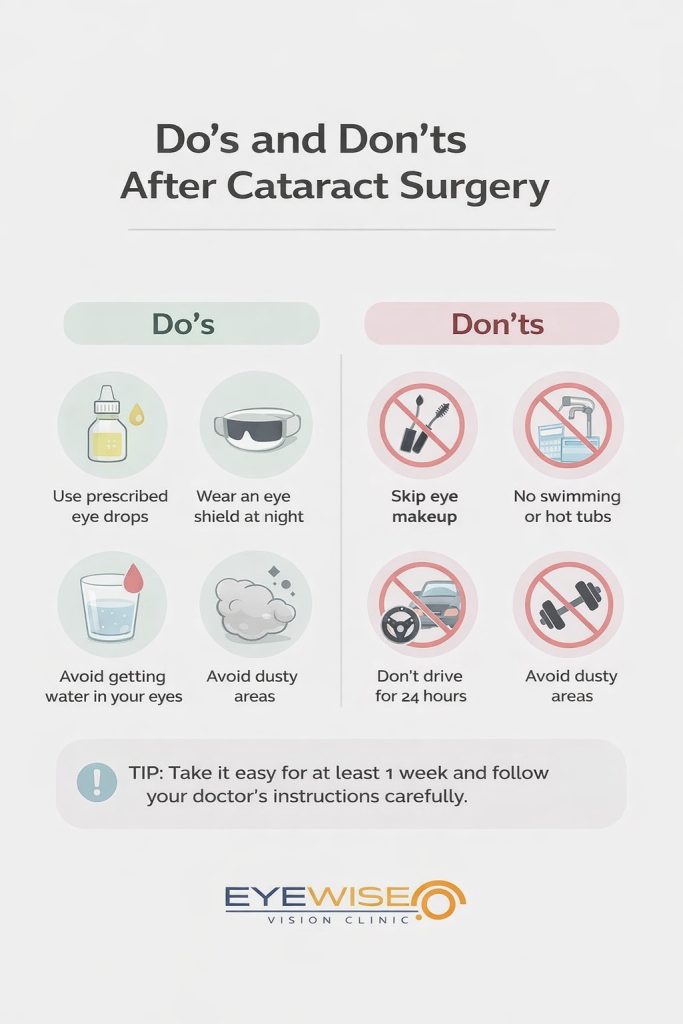
Post-op: When can I resume daily activities?
A protective eye shield is typically used for the first day or two after surgery, and most patients can return home on the same day. While full recovery may take several weeks, many patients are able to resume work within a week, depending on the nature of their job.
Medical leave will be provided as needed. Post-operative reviews are usually arranged at 1 day, 1 week, and 1 month to ensure proper healing and recovery.
Cataract Surgery Cost in Singapore & Financing Options
Cataract surgery at private eye centres in Singapore typically costs between $8,000 and $10,000+ per eye. The final cost may vary depending on the type of intraocular lens (IOL) chosen, the complexity of the surgery, and the experience of the surgeon performing the procedure.
Patients may be able to use MediSave to offset part of the surgical and hospital charges, subject to prevailing Ministry of Health (MOH) withdrawal limits. Subject to the terms of your policy, cataract surgery may also be claimable under personal or corporate insurance plans.
A detailed quotation will be provided after consultation and clinical assessment.

Using MediSave for Cataract Surgery
Singapore citizens and permanent residents may utilise up to $2,450 per eye from MediSave, in accordance with prevailing Ministry of Health (MOH) withdrawal limits.
As a Ministry of Health (MOH) accredited facility, our patients can utilise their Medisave.
- Daily Withdrawal Limit: Up to $300 per day for hospital charges.
- Surgical Limit: Up to $2,450 per eye (Table 4A Procedure).
- Flexi-Medisave: Patients aged 65 and above may use an additional $300/year.

Insurance & Integrated Shield Plans
Subject to your insurance policy, cataract surgery may be claimable under personal or corporate insurance coverage. Commonly accepted insurance panels include, but are not limited to:
- AIA HealthShield Gold Max
- Great Eastern SupremeHealth
- Prudential PruShield
- Income IncomeShield
For enquiries about your financing or insurance options, please contact our clinic and our team will be happy to assist
Guiding your cataract care at EyeWise Vision Clinic
Worried about cataracts for yourself or someone you care about?
At EyeWise Vision Clinic, our team provides thoughtful, meticulous care, supporting you from initial assessment through cataract treatment and recovery.
Supported by established cataract surgery techniques and technology, treatment is designed to minimise stress on the eye and promote smoother recovery.
Reach out to us if you would like to discuss your eye health or arrange an appointment.
Frequently asked questions
Patient information
Do I need to wait for my cataract to be ‘ripe’ before surgery?
No. This was true for older surgical methods, but modern micro-incision cataract surgery can remove the lens at any stage. In fact, earlier surgery is often easier and safer before the cataract becomes too dense.
Can I have cataract surgery on both eyes at the same time?
Typically, surgery is done one eye at a time, with a recovery gap of about two weeks. However, simultaneous bilateral cataract surgery may be considered in special cases, based on the patient’s condition and the surgeon’s judgment.
When is the right time to undergo cataract surgery?
You should consider surgery if cataracts begin affecting your:
- Daily activities like reading, driving, or recognising faces
- Night vision or sensitivity to light
- Work performance or overall quality of life
- Ability to manage other eye conditions
Do cataracts go away on their own?
No. Cataracts are caused by age-related changes in the eye’s lens and will not reverse naturally. The only effective treatment is surgical removal of the cloudy lens and replacement with an artificial one.
What are the risks or complications of cataract surgery?
Cataract surgery is generally safe, but like all procedures, it carries risks. Complication rates range from 0.5% to 5%, depending on eye condition and surgical complexity.
Possible complications include:
- Posterior capsular opacification (after-cataract)
- Infection (rare)
- Retinal detachment
- Temporary swelling or increased eye pressure
- Lens fragments requiring additional treatment
Most complications are treatable with early medical attention.
Does insurance or Medisave cover cataract surgery in Singapore?
Yes. In Singapore:
- Medisave can be used to cover a portion of the cost, subject to withdrawal limits
- Private insurance coverage varies, so it’s important to check with your insurer
Patients are advised to confirm coverage, co-pays, and claim limits before scheduling surgery.
Will my cataract return after surgery?
Your original cataract will not return. However, some patients may develop a condition called posterior capsule opacification (PCO) months or years after surgery. PCO causes cloudy vision but is easily treatable with a YAG laser procedure.
How soon will I be able to see clearly after surgery?
Many patients notice vision improvement within a few days, but full clarity may take 1–2 weeks as the eye heals. Individual recovery timelines vary, and follow-up care is important.
Will I need glasses after cataract surgery?
Not always. Depending on the type of intraocular lens (IOL) used, many patients experience reduced dependence on glasses. However, reading glasses may still be helpful for some tasks.
When can I resume normal activities after cataract surgery?
You can usually return to light daily activities within a few days after cataract surgery, but should avoid:
- Strenuous exercise
- Bending over
- Swimming or rubbing your eyes
Follow your surgeon’s guidance for a personalised recovery plan.

Contact Us
Have concerns about your eye health or changes in your vision? Our team is here to help. Simply complete the form below, or reach us directly by phone (+65 6476 1211) or WhatsApp for assistance with your appointment.